Why must the airflow of fume hoods be kept constant: Judgment logic for laboratory variable airflow control
The fume hood relies on exhaust airflow to form an inward air barrier at the operating opening, carrying away harmful gases generated during experiments. The reliability of this barrier depends on the face velocity at the operating opening, not on how much air the fan exhausts. When the sash moves up and down or its opening changes, if the exhaust airflow remains constant, the face velocity fluctuates. The function of variable airflow control is to stabilize the face velocity within the designed range at any sash opening.
What Low or High Face Velocity Means
Low face velocity fails to pressurize the air barrier at the operating opening, allowing pollutants inside the hood to escape through sash gaps, directly endangering operators. High face velocity is not safer either; it creates turbulence inside the hood, drawing harmful substances toward the operating opening while exhausting large amounts of conditioned air, increasing heating and cooling energy consumption. The goal is to maintain a stable face velocity within the designed range, not to excessively increase it.
Acid mist, volatile organic compounds, and other pollutants have varying densities and diffusion characteristics. Heating experiments differ from ambient experiments in their airflow disturbances. The appropriate face velocity range should be determined by ventilation design based on pollutant types and experimental conditions. On-site verification with a face velocity meter at multiple measurement points is necessary; relying solely on the fan's rated airflow is insufficient.
Difference Between Constant Airflow and Variable Airflow Systems
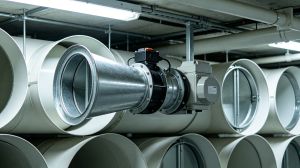
Constant airflow systems maintain a fixed exhaust airflow. When the sash closes, the opening area decreases, but the face velocity rises, with no energy savings, making them suitable for scenarios with few fume hoods and low usage frequency. Variable airflow systems adjust the modulating damper opening in sync with sash movement. Opening the sash increases exhaust airflow, while closing it reduces it, always maintaining a constant face velocity. These systems balance safety and energy savings, ideal for chemical and pharmaceutical laboratories with numerous fume hoods and long operating hours.
Where to Check for Reliable Variable Airflow Control
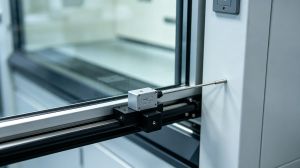
First, observe the response: after quickly moving the sash, can the face velocity return to the designed range within a short time? Second, examine the sensing method: does it indirectly estimate based on sash displacement, or directly measure with a face velocity sensor? Third, check if it automatically shifts to a low airflow energy-saving mode and maintains hood negative pressure when the operator leaves or the sash closes. These factors determine whether the system achieves true closed-loop control or merely installs an adjustable damper.