What role does the infrared personnel area sensor play in laboratory ventilation energy saving
The energy consumption of laboratory ventilation is significantly contributed by discharging the conditioned fresh air to the outdoors. If the fume hood continues to exhaust at full working airflow after the operator leaves, it will continuously expel cold and heat. The function of the infrared personnel area sensor is to determine whether the operator position is occupied, passing this signal to the variable airflow controller. It adopts different airflow strategies for occupied and unoccupied scenarios, reducing unnecessary exhaust without compromising safety.
What role does it play in the system
Variable airflow control first ensures a constant face velocity under any sash opening, which is the safety baseline. The personnel area sensor adds an energy-saving layer on this basis. When an operator is present, the system runs at the set working face velocity. After a period of inactivity, it shifts to standby or energy-saving mode, appropriately reducing the face velocity and exhaust volume, but still maintaining a negative pressure inside the cabinet to prevent harmful gas leakage. When the operator returns to the working position, the working airflow is quickly restored.
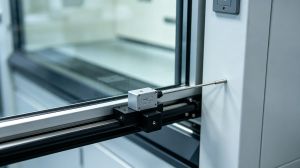
It typically works in conjunction with displacement sensors and face velocity sensors rather than replacing them. The sash opening determines the basic airflow, the face velocity ensures safety verification, and the personnel presence determines whether to enter energy-saving mode. Each performs its specific function, and energy-saving actions cannot violate the safety lower limits of face velocity and negative pressure.
Detection method and installation location
This type of sensor mostly uses infrared sensing to detect the presence or movement of a human body in the operational area to determine the occupied/unoccupied status. The installation location is generally on the vertical column or above the panel of the fume hood, facing the operator's standing area, covering the operator position without mis-scanning the corridor. Installation should avoid direct heat sources, direct sunlight, and frequently moving equipment to reduce false triggering.
What to pay attention to during use
First is the delay setting. Briefly turning around or retrieving items should not immediately reduce to energy-saving airflow. A reasonable delay must be set to avoid frequent airflow fluctuations. Second, the energy-saving mode must still maintain the cabinet's negative pressure and basic exhaust; the damper cannot be closed completely for the sake of saving electricity. Third, regularly check the sensitivity of the sensing. If it enters energy-saving mode while personnel are present, or does not switch when unoccupied for a long time, check the detection angle and probe cleanliness. Handling these points properly ensures that the personnel area sensor saves electricity without compromising safety.