
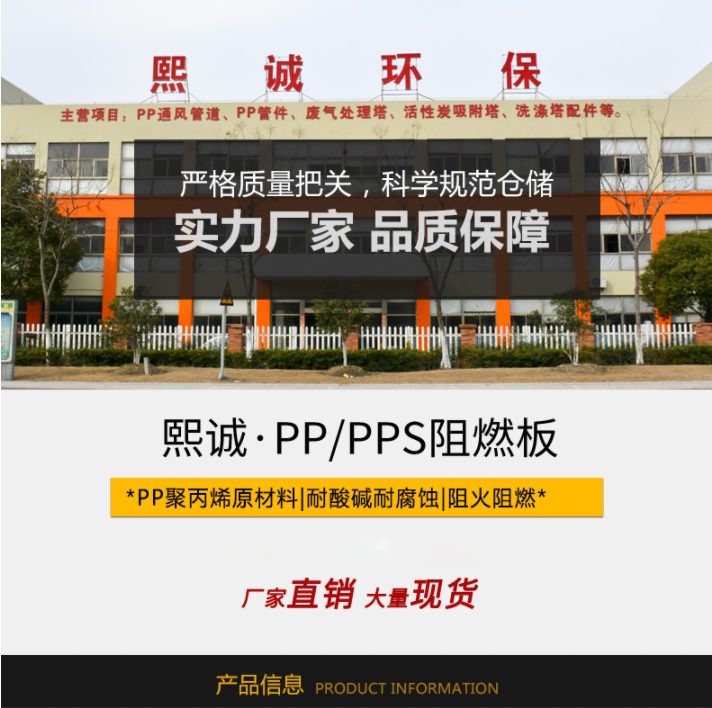
PPs Beige Flame Retardant Sheet Material
| Product Model | PPs-M Series (Thickness 2–60mm) |
|---|---|
| Category | PP-PPs Sheets |
| Reference Price | Price on request |
Product Overview
The beige flame-retardant PPs sheets are engineering plastic sheets extruded from flame-retardant polypropylene, named for their beige color. Beige is a traditional color long used in the corrosion-resistant equipment manufacturing industry and is widely applied in the processing of spray towers, washing towers, and ventilation pipes. The surface color of the sheets is soft, and welding marks are not obvious, ensuring a clean and uniform appearance of the finished product.
The sheets have a low density and are lightweight, making them easy to handle and install on-site. The material itself is non-toxic and odorless, meeting the requirements of environmental engineering. Beige PPs flame-retardant sheets combine heat resistance and impact resistance, maintaining good mechanical strength within the range of ambient to medium temperatures. They do not crack under slight impacts, making them suitable for various processing methods such as coiling, bending, and welding in workshops.
The beige PPs flame-retardant sheets supplied by Xicheng Environmental Protection are available in thicknesses ranging continuously from 2mm to 60mm. Thin sheets are used for coiling air ducts and processing fittings, while thick sheets are used for welding tower bodies and tanks. The sheets can be cut to customer-specified dimensions and are also available with matching beige flame-retardant welding rods to ensure that the weld color and performance match the base material.
Working Principle
The flame-retardant mechanism of beige PPs sheets is the same as that of white PPs sheets, which involves altering the combustion reaction process of the polypropylene base material by adding flame-retardant components. When exposed to fire, the surface of the sheets quickly carbonizes to form a barrier layer, inhibiting the transfer of heat and oxygen inward while reducing the release of flammable gases. The material extinguishes itself after leaving the fire source without continued combustion.
Beige does not alter the material's corrosion resistance principle. Polypropylene is a crystalline polymer with no reactive groups in its molecular structure that are easily susceptible to acid-base reactions. It exhibits chemical stability against common inorganic acids, alkalis, and salt solutions. When waste gases and liquids contact the inner wall of the sheets, they do not cause electrochemical corrosion, and the sheets do not rust or thin like carbon steel. Therefore, they are extensively used in corrosive environments such as chemical fibers, caustic soda, dyes, and wastewater treatment.
Structural Composition
The beige PPs sheets have a homogeneous structure throughout, with the same material from the surface to the core, without surface coatings or bonded layers. The cross-section is uniformly colored, free of bubbles and delamination. The extrusion molding process ensures the density along the thickness direction of the sheets, resulting in neat cutting edges, minimal springback when coiling, and full filling of weld puddles during welding.
When supplied, the sheet surfaces are protected with a film to prevent scratches during handling and processing. They are categorized into thin sheets, medium sheets, and thick sheets. Thin sheets are supplied in rolls or sheets for coiling pipes, while medium and thick sheets are provided as flat plates for welding cylinder bodies and wall panels. The color difference within the same batch of sheets is small, ensuring good appearance consistency when welding large areas.
Specification Model Table
The table below shows the conventional thickness ranges and processing applications of beige PPs flame-retardant sheets. Specific dimensions can be cut to order.
| Thickness Range | Typical Application | Supply Form |
|---|---|---|
| 2–5mm | Round air ducts, elbows, and fittings | Rolls or sheets |
| 6–14mm | Tower bodies, equipment casings | Flat plates |
| 15–30mm | Storage tank wall panels, water tank bodies | Flat plates |
| 30–60mm | Base flanges, load-bearing components | Flat plates |
Product Features
The beige PPs flame-retardant sheets are a classic material in the corrosion-resistant equipment industry, balancing processing performance and safety. Key features include:
- Beige appearance, with inconspicuous welds, ensuring an aesthetically pleasing overall finish for equipment
- Flame-retardant and self-extinguishing, suitable for equipment in indoor and high-traffic areas
- High corrosion resistance to various acids, alkalis, and salt media, making it highly suitable for chemical and wastewater environments
- Low density and lightweight, simplifying coiling, welding, and hoisting during construction
- Non-toxic and odorless, suitable for auxiliary applications in food and pharmaceutical industries
- Continuous thickness specifications, with matching same-color welding rods to ensure consistent welds
- Cuttable and recyclable, with scrap material suitable for secondary processing and utilization
| Material | Flame Retardant Polypropylene (PPs) |
|---|---|
| Sheet Color | Light Khaki |
| Thickness range | 2–60mm |
| Molding Process | Extrusion Molding Extrusion molding is a manufacturing process used to create objects of a fixed cross-sectional profile. The process |
| Flame Retardancy | Self-extinguishing |
| Corrosion resistance performance | Acid and Alkali Salt Resistant |
| Odor | Non-toxic and odorless |
| Welding method | Hot melt welding |
| Companion Welding Electrodes | Beige Flame-Retardant Welding Electrode |
| Supply Method | Full sheet or cut-to-size |
Application Industries
- Manufacturing of acid-alkali exhaust ventilation pipelines in spinning workshops of chemical fiber enterprises
- Collecting equipment shells for hydrochloric acid mist and alkali mist in chlor-alkali processes
- Corrosion-resistant reaction tail gas absorption towers for dye and pesticide production
- Production of odor-sealed covers and ventilation ducts for wastewater treatment plants
- Slot linings and exhaust structures for metallurgical pickling lines
- Corrosion-resistant fume hoods and exhaust pipelines for food and pharmaceutical workshops
- Corrosion-resistant enclosure panels for surface treatment lines in light industry
Typical Process Locations
The beige PP sheets are cut, bent, and welded at the equipment manufacturing plant to form ventilation ducts, towers, and tanks, which are then transported to the site for installation. The sheets serve as the wall materials for these equipment, determining their corrosion resistance lifespan and structural strength. Their flame retardancy is particularly critical when the equipment is installed indoors, on ceilings, or near production lines.
In the complete exhaust gas treatment process, the beige sheets are used to manufacture ventilation ducts that connect the workshop hood at the front end, run along supports in the middle section, and are Series wind valves and silencers, with the end connected to a spray tower or adsorption equipment. The sheets are exposed to corrosive gases from the collection end to the emission end, and their corrosion resistance and flame retardancy directly impact the operational safety of the entire system. Before cutting, the thickness and flame retardancy grade markings of the sheets should be verified. Bending and welding should be performed on flat workbenches to avoid surface scratches and forced deformation. Finished equipment should be properly covered during transportation and storage to prevent surface aging and discoloration due to prolonged sun exposure. Incoming materials should be batched and retained with material certificates for quality traceability and subsequent acceptance.
Related Products
View More Hot
Hot
PPs Flame Retardant Boards
 Hot
Hot
PP Flame-Retardant Welding Rod
 Hot
Hot
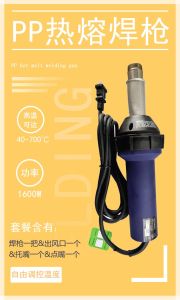
PP Plastic Hot Melt Gun
Get Quote
PP Plastic Hot Melt Gun / PPs-M Series (Thickness 2–60mm)