
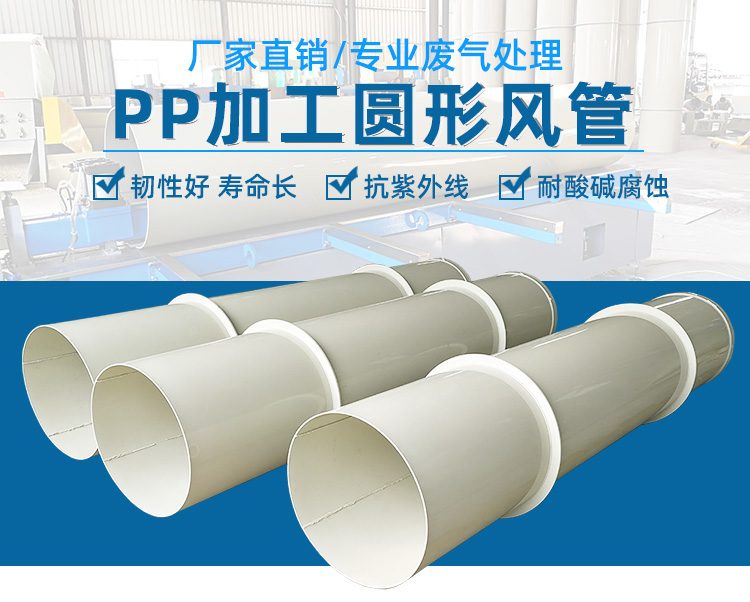
PP Processing Ductwork
| Product Model | PP-J Series (Customizable) |
|---|---|
| Category | PP Machined Products |
| Reference Price | Price on request |
Product Overview
PP processed ductwork is ventilation pipes reinforced with welded flanges made from PP flame-retardant sheet material. It features excellent toughness, long service life, acid and alkali corrosion resistance, is environmentally friendly, non-toxic, hygienic, and recyclable. It is primarily used for acid and corrosion prevention projects in industrial, agricultural, chemical, and environmental pollution treatment enterprises. PP flame-retardant sheet material is selected for large-diameter ductwork because extrusion molding for large pipes incurs high mold costs and transportation difficulties, whereas plate welding processing is not limited by molds, allowing for arbitrary customization of dimensions and shapes based on site requirements. Additionally, PP sheet material has good toughness and impact resistance, making it less prone to deformation under large-diameter negative pressure conditions. Xicheng Environmental is specialized in PP processed ductwork, large-diameter PP processed ductwork, main ventilation pipe processing, and PP main ventilation pipe manufacturing. We can customize various sizes and shapes of ductwork according to customer requirements to meet different site installation needs.
Working Principle
PP processed ductwork is responsible for exhaust gas collection and transportation in exhaust gas treatment systems, making it particularly suitable for large-diameter main ventilation pipes and non-standard size ductwork. Exhaust gas is collected from various branch pipes and enters the main ventilation pipe, which is then transported to exhaust gas treatment equipment for purification. Plate welding processed ductwork can be customized in size and shape based on site space. The flange-reinforced structure is robust, making it suitable for high airflow and long-distance transportation conditions. The PP material is corrosion-resistant and acid/alkali-resistant, ensuring the pipe does not age when long-term transporting corrosive gases.
Structural Composition
PP processed ductwork mainly consists of a tube body welded from PP flame-retardant sheet material, flange reinforcement rings, connecting bolts, and sealing gaskets. The tube body is formed by welding sheet material, with seams processed using PP hot welding technology, ensuring strong and sealed joints that will not crack or leak under normal operating conditions. Flange reinforcement rings not only connect pipe sections but also enhance the structural strength of large-diameter pipe bodies, preventing the pipes from collapsing during negative pressure operation. For large-diameter ductwork, additional reinforcement ribs can be added, arranged axially or circumferentially along the tube body to further improve rigidity and prevent deformation during transportation and installation. Compared to traditional sheet metal ductwork with field-sewn joints, PP welded ductwork offers better overall sealing and will not leak due to seam rust. Products can be customized into circular, square, rectangular, and other cross-sectional shapes, as well as elbows, tees, and reducing pipes, to meet complex piping layout requirements and facilitate on-site installation.
Processing and Shaping Comparison
The main difference between PP processed ductwork and shaped ductwork lies in the manufacturing process. Processed ductwork is made by welding sheet material, offering high flexibility for large-diameter, non-standard size, and special-shaped ductwork, but with relatively lower production efficiency. Shaped ductwork is formed using extrusion technology, suitable for standard specifications and bulk use, with uniform wall thickness and low air resistance. Both materials are corrosion-resistant and acid/alkali-resistant. Large-diameter main pipes are typically processed ductwork, while branch pipes and standard pipes can use shaped ductwork to reduce costs. The two can be used together to form a complete ventilation system. When selecting, processed ductwork should be chosen for main pipes with diameters exceeding the conventional range of extrusion molding, pipes requiring square or irregular cross-sections due to limited site space, and situations where openings need to be made on the pipe wall for branch connections. Shaped ductwork is preferred for standard specifications and medium/small-diameter branch pipes to reduce costs. Both types of ductwork in the same system can be connected via flanges or reducing pipes, with identical materials ensuring reliable connections.
Specification Model Table
| Configuration Item | Available Range | Description |
|---|---|---|
| Main Material | PP Flame-Retardant Sheet Material | Corrosion-Resistant, Acid/Akali-Resistant |
| Processing Method | Sheet Welding, Flange Reinforcement | Robust Structure |
| Tube Shape | Round/Square/Rectangular | Customizable Irregular Shapes |
| Connection Method | Flange/Slip Fit | Selected Based on Pipe Diameter |
| Applicable Diameter | Large Diameter and Non-Standard | Supports Customization |
| Reinforcement Method | Flange Reinforcement/Reinforcement Ribs | Prevents Deformation |
| Accessory Fittings | Elbows/Tees/Reducing Pipes | Complete Supply |
The above are standard configuration items. Large-diameter and non-standard sizes support customization. Specific specifications are designed and confirmed by technical personnel based on site conditions, airflow requirements, and space constraints.
Product Features
- PP flame-retardant sheet material welding processing, acid/alkali corrosion resistance, good toughness, long service life
- Flange reinforcement structure is robust, suitable for large-diameter main ventilation pipes
- Customizable round, square, rectangular, and irregular fittings, high flexibility
- Strong and sealed welds, reliable connections, low leakage risk
- Additional reinforcement ribs for large diameters to prevent pipe deformation
- Non-toxic, hygienic, recyclable, environmentally friendly, widely used in corrosion prevention projects
| 主体材质 | PP 阻燃聚丙烯板材 |
|---|---|
| 加工方式 | 板材焊接加工 |
| 管材形状 | 圆形/方形/矩形 |
| 连接方式 | 法兰连接/承插连接 |
| 主要用途 | 大直径主通风管道、非标风管 |
| 适用介质 | 腐蚀性气体、酸碱废气 |
| 板材特性 | 防腐、耐酸碱、抗 UV、阻燃 |
| 韧性特性 | 韧性好、寿命长 |
| 规格范围 | 大直径及非标尺寸 |
| 加固方式 | 法兰加固 |
| 加强筋 | 可增设 |
| 安装方式 | 室内外均可 |
| 固定方式 | 支架固定 |
| 环保特性 | 无毒、卫生、可回收利用 |
Application Industries
- Large-diameter corrosive gas transmission pipelines in chemical and metallurgical industries
- Anti-acid and anti-corrosion main ventilation pipelines for environmental sewage disposal projects
- Large airflow exhaust gas collection main pipelines in painting and coating industries
- Non-standard size ventilation pipelines in electronics and semiconductor industries
- Large-diameter ventilation and exhaust pipelines in food processing industries
- Anti-corrosion ventilation pipelines in agriculture and breeding industries
- Overall ventilation system main pipelines in industrial workshops
Typical Process Locations
In large-scale exhaust gas treatment systems, PP processing ducts are typically used as main ventilation pipelines. Exhaust gas from various workshops or workstations is collected through branch pipes and converged into the main pipeline fabricated by PP processing ducts, which is then centrally transported to exhaust gas treatment equipment such as PP spray towers or activated carbon adsorption towers for purification. The purified gas is discharged through an exhaust stack up to standard after being blown by a PP fan. Large-diameter main pipelines are processed by plate welding, with flanges added for structural reinforcement to ensure rigidity. The pipeline layout and cross-sectional shapes can be customized based on the site's architectural structure. Xicheng Environmental can provide a complete solution from main pipelines to branch pipes, fittings, fans, and treatment equipment. When designing large-diameter main pipelines, structural strength verification should be conducted. The plate thickness and reinforcement spacing should be determined based on the pipe diameter and internal pressure to prevent the pipeline from collapsing under negative pressure operation. The spacing of pipeline supports should be set reasonably, and expansion joints or flexible connections should be installed for long-distance pipelines to absorb displacement caused by thermal expansion and contraction, ensuring long-term safe and stable operation of the system.
Related Products
View More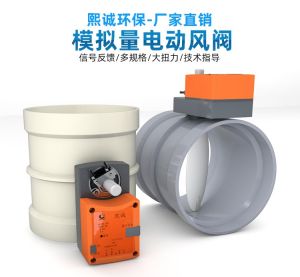 Hot
Hot
PP Fire-Resistant Analog Air Valve
 Hot
Hot
PP Fire-Resistant Closed-Check Valve
 Hot
Hot
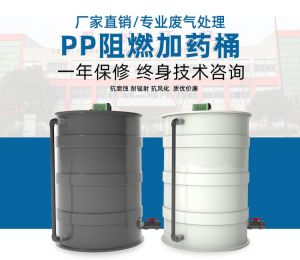
PP Flame Retardant Additive Drum
 Hot
Hot
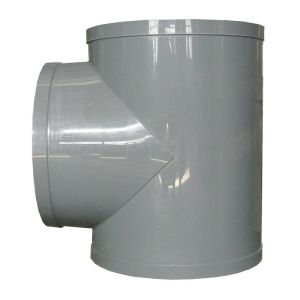
PP Flame Retardant Processed T-Connector
Get Quote
PP Flame Retardant Processed T-Connector / PP-J Series (Customizable)