
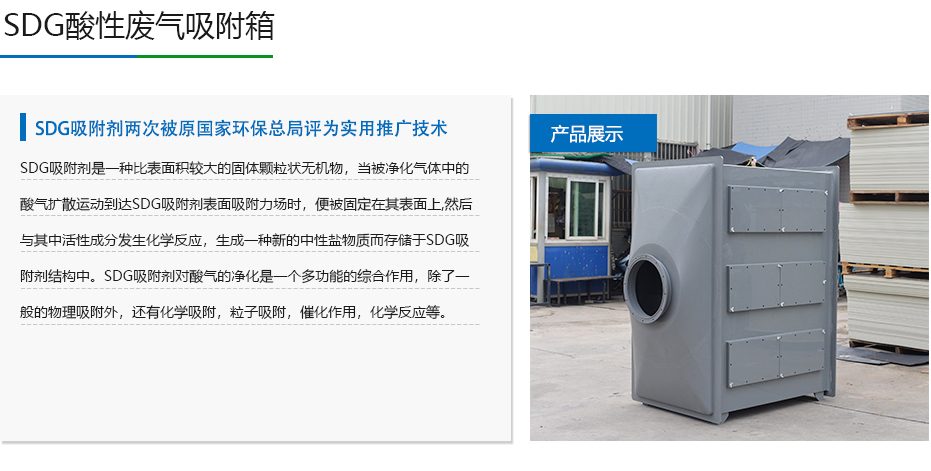
SDG Dry Acid Mist Adsorption Box
| Product Model | SDG Dry Acid Gas Adsorption Unit |
|---|---|
| Category | Waste Gas Treatment Equipment |
| Reference Price | Price on request |
Product Overview
The SDG Dry Acid Mist Adsorption Box is a water-free and non-circulating chemical dry acid gas purification equipment. It is filled with SDG composite acid gas adsorbents (a dry adsorption filter material composed of alkaline and porous mineral materials) inside the box. Acid mist-containing exhaust gas passes through the adsorbent layer under the action of a fan, where acidic gases are adsorbed and chemically reacted with the adsorbent, fixed in the filter material, and then directly discharged. It is primarily used for purifying various acidic gases such as sulfuric acid mist, hydrochloric acid mist, nitric acid mist, and hydrofluoric acid mist. It is particularly suitable for applications where water washing is not feasible, in cold regions, or where wastewater generation is undesirable.
Compared to spray washing towers, the SDG Dry Adsorption Box has distinct features: First, it can purify multiple acid gases simultaneously, showing good removal efficiency for common inorganic acid gases; Second, it has high purification efficiency, with the thickness and loading of the filter layer designed according to treatment requirements; Third, it is simple to maintain, requiring no pumps, nozzles, or circulating water systems, only periodic replacement of adsorbents; Fourth, it has no freeze protection requirements, and dry operation eliminates pipeline and tank cracking issues in winter in northern regions; Fifth, it is safe to use, operating without water or chemical solutions; Sixth, it produces no secondary pollution, generating no wastewater, and exhausted filter materials are treated as solid waste.
Xicheng Environmental can design SDG Dry Acid Mist Adsorption Boxes according to the type of acid gas, concentration, and treatment airflow. The filter material type, loading, layer thickness, and replacement cycle are determined. The box body can be made of PP, PPs, or anti-corrosion carbon steel. The filter material is loaded and replaced via drawer or filter cartridge systems, and it can be used alone or in series with spray towers and activated carbon boxes to form multi-stage treatment processes.
Working Principle
SDG Dry Adsorption is a process where chemical and physical adsorption work together. The SDG adsorbent is a porous alkaline composite material with a large specific surface area and reactive active components. As acid-containing exhaust gas passes through the filter layer, acidic gas molecules first diffuse into the adsorbent pores and are physically adsorbed. Subsequently, they undergo acid-base chemical reactions with the alkaline active components, forming stable salts that are fixed within the adsorbent, thereby permanently removing them from the gas phase. For example, sulfuric acid, hydrochloric acid, nitric acid, and hydrofluoric acid gases react with the alkaline components to form corresponding salts, and the reaction products do not volatilize, resulting in purified gas.
As the reaction progresses, the active components in the adsorbent are gradually consumed, forming a reaction zone from the inlet side to the outlet side of the filter layer. When the reaction zone advances to the end of the filter layer and the outlet acid gas concentration reaches the breakthrough value, the filter material becomes ineffective and needs replacement. A thicker filter layer and longer residence time allow for more thorough contact between acid gases and the adsorbent, resulting in higher purification efficiency. Therefore, the loading amount and layer thickness of the filter material can be designed to ensure high purification efficiency and a reasonable replacement cycle. The entire process is dry, without water spraying or circulating liquid, so no wastewater is generated, no nozzle clogging or winter icing occurs, no pumps or chemical dosing systems are required, and equipment operation and maintenance are greatly simplified.
Structural Composition
The SDG Dry Acid Mist Adsorption Box consists of a box body, an adsorbent bed, filter material support, airflow distribution plate, inspection door, and inlet and outlet ports. The box body is a rectangular sealed box with PP, PPs, or anti-corrosion carbon steel material, reinforced outer walls, and one end for inlet and the other for outlet. Inside the box, one or more adsorbent beds are installed, composed of support grating, porous plates, and filter screens, with SDG adsorbents loaded into the bed frame.
The adsorbent can be loaded via drawer-type filter frames or filter cartridges, which are pushed into the box along rails and sealed tightly. For replacement, old filter frames are removed, and new ones are installed, offering convenient operation. An airflow distribution plate on the inlet side ensures uniform passage of acid gas across the entire filter layer cross-section, preventing bypass and premature breakthrough. The box is equipped with an inspection door, a differential pressure gauge port, and a sampling port to monitor filter layer resistance and outlet concentration. The bottom is fitted with legs and a dust discharge port, while the inlet and outlet ports are connected to ducts via flanges. For multi-stage purification, different functional filter layers can be arranged inside the box.
Specification Model Table
The following table compares the characteristics of SDG Dry Adsorption and Spray Washing, with selection based on site conditions.
| Item | SDG Dry Adsorption | Spray Washing |
|---|---|---|
| Medium | Dry composite adsorbent | Water and absorbent |
| Wastewater | Does not produce wastewater | Has circulating wastewater |
| Freeze Protection | No freeze protection required | Needs freeze protection in winter |
| Maintenance | Periodic filter replacement | Pipe, pump, and chemical maintenance |
Product Features
The SDG Dry Acid Mist Adsorption Box features dry purification, multi-acid treatment, and simple maintenance, making it an ideal equipment for acid mist control in water-free and cold regions. Its main features are as follows.
- Simultaneous purification of multiple acid gases, wide applicability
- Chemical adsorption fixes acid gases, high purification efficiency
- Filter material loading and layer thickness can be designed as needed
- Dry operation without water, no wastewater or secondary pollution
- No pumps, nozzles, or chemicals, simple maintenance and low failure rate
- No freeze protection required, suitable for cold and water-scarce regions
- Safe to use, with convenient drawer-type filter replacement
| Box material | PP / PPs / Corrosion-Resistant Carbon Steel |
|---|---|
| Purification Medium | SDG Composite Adsorbent |
| Purification Principle | Dry Physical Chemical Adsorption |
| Object Processing | Multiple acidic gases |
| Operating Mode | Dry, no water required |
| Filling Method | Drawer-type Filter Frame |
| Wastewater Generation | No wastewater |
| Freeze Protection Requirements | No antifreeze requirements |
| Replace Basis | Export Concentration / Pressure Difference |
| Specifications and Features | Designed based on airflow |
Application Industries
- Acid Mist Treatment in Cold Northern Regions (Freeze-Proof)
- Acid Gas Purification in Water-Shortage or Difficult Drainage Areas
- Multi-Acid Gas Mixed Exhaust Treatment in Chemical and Pharmaceutical Workshops
- Dry Acid Mist Purification in Laboratories and Testing Institutions
- Acid Mist Treatment in Metallurgical Pickling and Battery Industries
- Acid Gas Treatment Where Waste Water Generation is Unwanted
- Series Equipment for Deep Acid Gas Purification After Spraying Tower
Typical Process Location
SDG Dry Adsorption Box is installed between the acid gas collection duct and fan or after the fan. The exhaust gas passes through necessary pre-treatment (dust and mist removal to ensure the gas entering the filter medium contains no significant dust or droplets) before entering the adsorption box. The gas flows horizontally or vertically through the filter layer, where acid gas is adsorbed and purified. The purified gas is discharged through an exhaust stack. The equipment can be used in single-stage for treating moderately concentrated acid gas, or arranged after a spraying tower as a deep purification barrier. The former is suitable for low-concentration waterless scenarios, while the latter is used for high-concentration acid gas requiring high removal rates.
During installation, the box is positioned and leveled. After inserting the filter frame, the sealing gaskets are compressed to ensure the airflow passes completely through the filter layer without bypassing. Inlet and outlet ports are connected according to airflow direction markings. Before operation, record the filter loading date, initial pressure drop, and outlet concentration baseline. During operation, monitor pressure drop changes (to detect dust blockage) and outlet acid gas concentration (to detect breakthrough). When replacement criteria are met, remove the filter frame to replace SDG adsorbent. Waste adsorbent contains reaction-generated salts and residual acid. It should be properly disposed of as solid waste according to its properties and local regulations, with replacement records retained.
Related Products
View More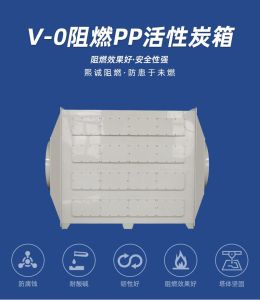 Hot
Hot
V0 PPs Fire Retardant Activated Carbon Box
 Hot
Hot
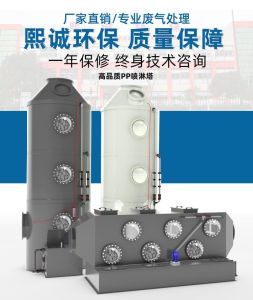
Flame Retardant Horizontal Spray Tower
 Hot
Hot
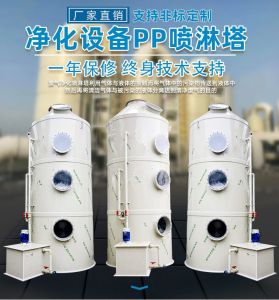
PP Scrubber
 Hot
Hot
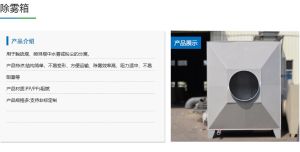
PP Defogging Box
Get Quote
PP Defogging Box / SDG Dry Acid Gas Adsorption Unit