
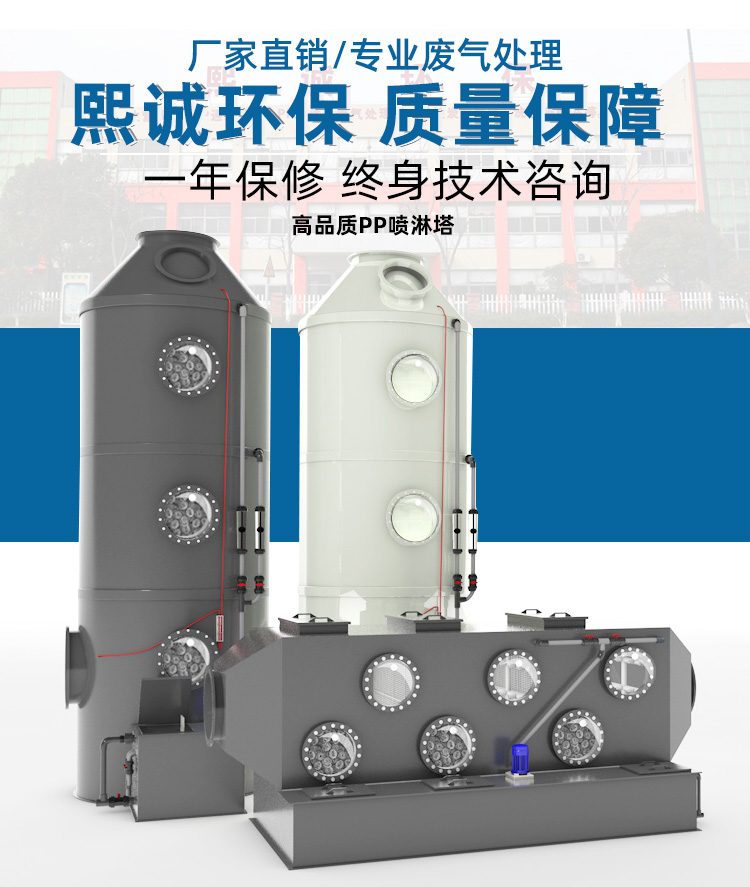
Flame Retardant Horizontal Spray Tower
| Product Model | Horizontal Spray Washing Tower Series |
|---|---|
| Category | Waste Gas Treatment Equipment |
| Reference Price | Price on request |
Product Overview
The PPs flame-retardant horizontal spray tower is a cross-flow (horizontal arrangement) spray washing and purification equipment. The exhaust gas enters the tower body horizontally and sequentially passes through the horizontally arranged spray section and packing section, coming into countercurrent or cross-current contact with the absorption liquid before being discharged from the other end. Compared to conventional vertical spray towers, the main features of horizontal towers are their low overall height, relatively larger footprint, and larger tower bottom liquid surface contact area. They can be installed in indoor spaces, equipment mezzanines, and locations with limited ceiling height. The horizontal arrangement of exhaust gas inlets and outlets facilitates easy connection with workshop horizontal ducts.
In plating, chemical, and semiconductor factories, exhaust gas treatment equipment is sometimes unable to be installed outdoors or on rooftops. Indoor installation is limited by ceiling height and hoisting conditions, making it difficult to place vertical high towers. The horizontal spray tower expands the purification process horizontally, ensuring sufficient gas-liquid contact time through multi-stage spraying and packing. The tower body can be directly mounted next to equipment or on a support, with inlets and outlets connected directly to horizontal ducts, reducing elbows and vertical pipes. The tower body is constructed from PPs flame-retardant panels, which are acid/alkali resistant and self-extinguishing, meeting indoor equipment's corrosion and fire protection requirements.
Xicheng Environmental can design PPs flame-retardant horizontal spray towers based on exhaust gas types, treatment airflow, site ceiling height, and planar layout. Multiple-stage spray pipes, packing layers, and demisting sections can be arranged inside the tower, equipped with circulation pumps, dosing devices, and inspection doors. PPs or PP panels are optional. Tower length, cross-section, and inlet/outlet orientations are customized to site conditions, making them suitable for indoor corrosion-resistant exhaust gas treatment and projects where vertical tower installation is constrained.
Working Principle
The horizontal spray tower still employs liquid absorption to purify exhaust gas. The exhaust gas enters horizontally from one end of the tower and flows horizontally through the spray zone. Nozzles spray absorption liquid, forming droplets and films that flow downward or in countercurrent, allowing acidic/alkaline pollutants in the exhaust gas to be absorbed and neutralized by the liquid. The horizontal packing layer inside the tower increases gas-liquid contact area, ensuring thorough absorption. The purified gas continues to flow horizontally, passes through the demisting section to remove entrained liquid droplets, and is discharged from the other end by a fan. The liquid absorbing pollutants flows into the bottom water tank for recycling.
The gas-liquid contact feature of the horizontal arrangement is horizontal airflow and downward liquid flow, primarily cross-current contact. The large liquid surface at the bottom of the tower also provides some washing effect on exhaust gas passing near the surface. To compensate for the difference in mass transfer driving force between cross-current and countercurrent, horizontal towers typically feature multiple-stage spraying and packing sections, extending the horizontal flow path and contact time. The PPs tower body and packing are acid/alkali resistant and self-extinguishing. The tower's internal airflow velocity is designed to be low to prevent liquid entrainment by horizontal high-speed airflow. The demisting section ensures the outlet gas is free of water droplets, protecting downstream fans and ducts.
Structural Components
The horizontal spray tower consists of a horizontal tower body, inlet, spray section, packing section, demisting section, circulation water tank, spray piping, and inspection structure. The tower body is a horizontal cylindrical or box-shaped structure welded from PPs panels, divided into sections along its length. One end is horizontally inhaled, and the other is horizontally exhausted. The bottom is a circulation water tank, with reinforcing rings and supports on the exterior.
Inside the tower, one or more layers of spray pipes and nozzles are arranged according to the process. Packing layers (e.g., multi-faceted spheres, Raschig rings) are placed above or between the spray pipes, supported by grates. The outlet end features baffle plates or mesh demisting sections. The bottom water tank is equipped with a circulation liquid outlet, drain, overflow, make-up water inlet, and dosing inlet. The circulation pump delivers the absorption liquid to the spray pipes. Multiple inspection doors are installed along the side of the tower for easy access to the interior for maintenance and packing replacement. Inlets and outlets are horizontal flange connections for horizontal ducts, with the tower equipped with level indicators, manholes, and ladder platforms. PPs panels and welding rods are flame-retardant and compatible, meeting indoor fire protection requirements.
Specification Model Table
The following table compares the layout characteristics of horizontal and vertical spray towers. Dimensions are based on airflow and site design.
| Item | Horizontal Spray Tower | Vertical Spray Tower |
|---|---|---|
| Arrangement Direction | Horizontal | Vertical |
| Height | Low, suitable for indoor installation | Higher |
| Footprint | Larger horizontal footprint | Smaller footprint |
| Airflow | Horizontal inlets and outlets, cross-current | Bottom inlet, top outlet, countercurrent |
Product Features
The PPs flame-retardant horizontal spray tower is low in height, easy to connect, and corrosion-resistant and flame-retardant, making it an ideal washing and purification equipment for indoor and low-ceiling spaces. Its main features are as follows.
- Low overall height in horizontal arrangement, suitable for indoor and mezzanine installation
- Horizontal exhaust gas inlets and outlets, easy connection with horizontal ducts with fewer elbows
- Large contact area at the bottom, multi-stage spraying ensure purification efficiency
- PPs flame-retardant panels, acid/alkali resistant and self-extinguishing
- Tower length and cross-section customizable to site dimensions
- Multiple side inspection doors, convenient for packing replacement and internal maintenance
- Can be equipped with circulation pumps, dosing, and demisting, available as a complete package
| Material of tower body | PPs Flame Retardant Panels |
|---|---|
| Layout configuration | 卧式横向 |
| Flow Direction | Lateral horizontal entry and exit |
| Contact Method | Spray Cross-Flow Packing |
| Number of Spray Stages | Multi-level Customizable |
| Flame Retardancy | Self-extinguishing |
| Corrosion Resistance Performance | Acid-alkali-resistant salt |
| Applicable scenarios | Indoor ceiling height limited |
| Specifications and Features | Dimension Customization |
| Complementary | Pump chemical dosing anti-fogging system |
Application Industries
- Acid-alkali fume washing and purification for indoor plant layout
- Horizontal fume treatment for equipment mezzanines with limited ceiling height
- Horizontal scrubbing towers installed near electroplating production lines
- Low-height fume treatment equipment for basements and equipment floors
- Purification scenarios requiring direct linear connection with horizontal ducts
- Corrosion-resistant exhaust ventilation and washing equipment for semiconductor plant interiors
- Transformation projects where vertical towers cannot be installed or placed
Typical Process Locations
The horizontal spray scrubbing tower is installed near equipment in workshops, on equipment floors, or in roof-constrained areas. The tower is horizontally mounted on a concrete foundation or steel support. Fumes enter the tower from one end via horizontal ducts and are exhausted from the other end by a fan into an exhaust stack, or directly connected to an existing horizontal exhaust system. Space is left around the tower for maintenance door access and media replacement channels. The circulation water tank and pump are located nearby, while the dosing unit is placed beside the tower for convenient medication preparation and replenishment.
During installation, the tower is horizontally positioned with evenly distributed support loads. Flanges and flexible connections are used between the tower and ducts to prevent duct weight from pressing on the tower wall. Valves and flexible connections are installed at the inlet and outlet of the circulation pump, and the spray pipes are centered and fixed inside the tower. Before operation, inspections are conducted on nozzle atomization and coverage, uniform media installation, and proper demisting section placement. Water tank filling and circulation tests are performed, along with checks for weld and flange leaks in the tower body. During operation, horizontal flow velocity inside the tower is controlled to prevent liquid carryover, and regular inspections are carried out for media blockage, nozzle wear, and water tank quality.
Related Products
View More Hot
Hot
V0 PPs Fire Retardant Activated Carbon Box
 Hot
Hot
SDG Dry Acid Mist Adsorption Box
 Hot
Hot
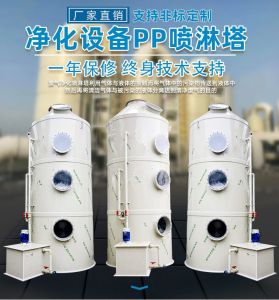
PP Scrubber
 Hot
Hot
PP Defogging Box
Get Quote
PP Defogging Box / Horizontal Spray Washing Tower Series