
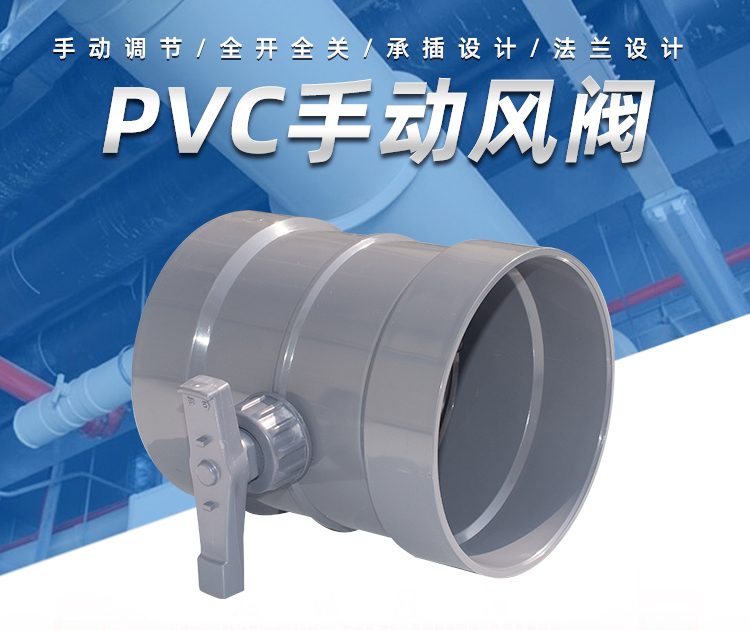
PVC Plastic Damper
| Product Model | PVC Forming Adjustment Damper |
|---|---|
| Category | PP Molded Products |
| Reference Price | Price on request |
Product Overview
PVC Air Valve is a plastic ventilation regulating valve formed from polyvinyl chloride material, with a structure and function similar to PP Air Valve. It adjusts airflow by rotating the vane inside the valve body through an external handle, changing the cross-sectional area of the pipeline to achieve air volume regulation and air duct on/off control. PVC material exhibits good acid and alkali resistance and certain mechanical strength. The valve body is neatly formed with a smooth surface, making it an economical and practical regulating component in ventilation and exhaust systems.
Compared to PP Air Valves, PVC Air Valves offer better rigidity, stable formed dimensions, and relatively cost-effective pricing, making them suitable for medium-corrosion, ambient-temperature exhaust applications. In high-corrosion, flame-retardant requirements, or welding connection scenarios, PP or PPs Air Valves are more commonly selected. PVC Air Valves are compatible with PVC Air Ducts, PVC Flexible Connectors, etc., primarily using spigot adhesive bonding and flange connections for easy installation.
The PVC Air Valves supplied by Xicheng Environmental Protection are formed valve bodies, with circular specifications matching plastic air duct diameters. The vane rotates smoothly, and the handle includes a position indicator and locking mechanism. The product is primarily used for laboratory exhaust, general acid/alkali venting, building ventilation, and branch air volume balancing for environmental equipment pipeline systems, meeting general corrosion-resistant ventilation system regulation needs.
Working Principle
PVC Air Valve regulates airflow through vane angular displacement. When the handle is turned, the valve shaft drives the circular vane to rotate within the valve body. The angle between the vane plane and the airflow direction continuously changes: when the vane is perpendicular to the airflow, the flow cross-section is minimized, and the valve approaches closure; when parallel to the airflow, the flow cross-section is maximized, and the valve is fully open. By adjusting the vane angle, local resistance is continuously regulated to control branch airflow.
The corrosion resistance of PVC material stems from chlorine elements in its molecular structure, providing good chemical stability and corrosion resistance to most dilute acids, alkalis, and salts. It is non-conductive and does not rust. In ambient-temperature corrosive exhaust environments, PVC valve bodies and vanes do not rust or jam like steel valves, maintaining smooth edges and inner surfaces for flexible rotation. Note that PVC has a lower heat resistance than PP and is not suitable for high-temperature gas applications.
Structural Components
PVC Air Valve consists of a valve body, vane, valve shaft, shaft seat, handle, and locking mechanism. The valve body is a formed cylinder with spigot ends or flanges for pipe connection. The vane is a circular plate fixed to a cross shaft passing through the valve body. The valve shaft is supported by two shaft seats, with seals at the shaft holes to reduce air leakage. The valve body exterior includes a handle, position markings, and locking screws.
Spigot-type valves use spigot ends that mate with PVC Air Ducts, secured with adhesive or fasteners. Flange-type valves feature flanges on both ends, connected with bolts and washers for easy disassembly. Vane edges can be equipped with soft sealing strips to enhance shut-off air tightness. The overall structure is lightweight, allowing single-person installation and operation. Larger-diameter valves incorporate reinforced shaft seats and structures to withstand vane weight and airflow pressure.
Specification and Model Table
The table below outlines the types and applications of PVC Air Valves, with diameters matching plastic air duct series.
| Form | Connection | Application |
|---|---|---|
| Spigot-type | Spigot adhesive | PVC Air Duct fixed sections |
| Flange-type | Bolt flange | Detachable sections |
| Soft-sealing type | Spigot / Flange | High shut-off requirements |
Product Features
PVC Air Valve is economical, lightweight, and easy to adjust, making it a common regulating valve for general corrosion-resistant ventilation pipes. The valve body is lightweight and cost-effective, with intuitive handle adjustment. Both spigot and flange connection methods facilitate on-site installation, suitable for ambient-temperature, medium-corrosion exhaust systems. Key features include:
- PVC formed, resistant to dilute acids, alkalis, and salts
- Lightweight structure, easy installation and operation, cost-effective
- Handle adjusts opening, with markings and locking device
- Smoothly rotating vane, free from jamming in ambient temperatures
- Multiple connection options (spigot/flange), compatible with PVC Air Ducts
- Smooth, rust-resistant surface with low airflow resistance
- Comprehensive specifications, suitable for branch airflow balancing
| Material of valve body | PVC Polyvinyl Chloride |
|---|---|
| Molding Process | Injection molding |
| Drive Type | `Manual Handle` |
| Adjustment Parts | Rotating Valve Disc |
| Connection Method | Splicing Adhesive / Flange |
| Corrosion resistance performance | Corrosion-resistant to dilute acids, alkalis, and salts |
| Function | Flow Rate Adjustment / On/Off Control |
| Applicable Gases | Room Temperature Corrosion Exhaust |
| Valve disc structure | Single-Leaf Butterfly Valve |
| Lock Open Degree | Locking Handle |
| Sealing Features | Valve disc sealing |
Application Industries
- Lab ventilation system exhaust branch duct airflow regulation
- General acid-base exhaust duct branch balancing valve
- Electronics factory corrosive gas exhaust duct regulating valve
- Schools and testing institutions fume hood branch duct air valves
- Environmental protection equipment ambient exhaust Complementary regulating valve
- Building ventilation and civil defense engineering plastic duct valves
- Weakly corrosive chemical auxiliary exhaust system
Typical Process Locations
PVC air valves are installed at ambient temperature, moderately corrosive exhaust branch ducts and equipment interfaces, with one per exhaust point downstream for balancing branch airflow during commissioning. Valve locations should be selected where operator handles are accessible and degree indicators are visible, avoiding high-temperature pipes and strong corrosive concentrated acid environments. In such cases, PP or PPs air valves should be used instead.
During ventilation system commissioning, fully open all PVC air valves to start the fan, then gradually close valves from the most unfavorable loop downward, paired with airflow measurement, until each exhaust point reaches design airflow. Finally, lock handles and record openings. During operation, valves maintain set positions, while corresponding branches are closed for maintenance. Slip-fit adhesive joints are not easily disassembled;Flanged should be selected for disassembly needs. Before installation, verify diameters and slip-fit or Flange connection methods. Clean and seal slip-fit joints before insertion, ensuring curing time, while Flange connection requires diagonal tightening with gaskets. Install valves in accessible locations for operation and observation, avoiding high-temperature and strong corrosive acid environments. After locking during commissioning, mark openings. During operation, regularly inspect vane rotation, handle locking, and sealing surfaces. If jamming occurs due to dust or crystallization, disassemble and clean; if aging or deformation is found, replace the valve.
Related Products
View More Hot
Hot
PVC Flexible Duct Connector
 Hot
Hot
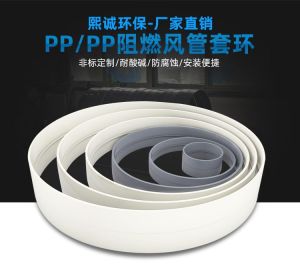
PP plastic ring
 Hot
Hot
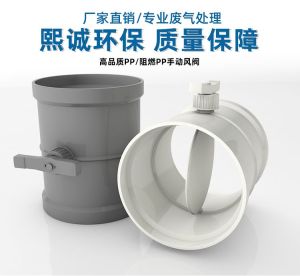
PP Manual Damper
 Hot
Hot
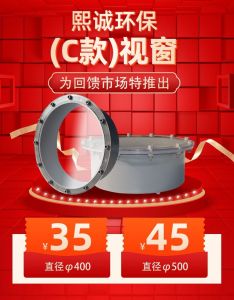
PP Equipment Window
Get Quote
PP Equipment Window / PVC Forming Adjustment Damper