
Maintenance of PP flame-retardant spray tower requires regular inspection of nozzles, water pumps and tower body corrosion, cleaning of filter screens, replacement of wear parts, to ensure normal operation of the equipment and extend its service life. Specific operations shall be carried out in accordance with the equipment manual and actual working conditions.
PP Flame-retardant Spray Tower maintenance mainly includes regular inspection of spray nozzles, water pumps, tower body corrosion, cleaning filter screens, replacing wearing parts, ensuring normal equipment operation and extending service life. Operations shall be performed in accordance with the equipment manual and actual working conditions.
Selection Suggestion: When selecting PP Flame-retardant Spray Tower, confirm equipment parameters according to actual working conditions to ensure meeting waste gas treatment requirements. For further consultation or customization, please contact Huizhou Xicheng Environmental Protection Technology Co., Ltd. for professional services.
What are the key points for daily inspection of PP Flame-retardant Spray Tower?
Conclusion: Daily inspection shall focus on spray nozzles, water pumps, tower body and pipelines. Basis: Check if spray nozzles are clogged or damaged to ensure spray effect; check if water pumps operate normally without abnormal noise or vibration; check if tower body and pipelines have corrosion or leakage, and handle in time.How to clean the spray nozzles and filter screens of PP Flame-retardant Spray Tower?
Conclusion: Spray nozzles shall be cleaned with soft brushes, and filter screens shall be taken out for cleaning or replacement regularly. Basis: Clogged spray nozzles will affect spray effect, so dirt shall be removed with soft brushes; dirty filter screens will affect air intake, so they shall be taken out for cleaning or replacement regularly, and the specific cycle shall be confirmed according to actual working conditions.What are the anti-corrosion measures for PP Flame-retardant Spray Tower?
Conclusion: Regularly inspect the corrosion condition of the tower body, and apply anti-corrosion coating if necessary. Basis: PP material is corrosion-resistant, but inspection is still required after long-term use. Corroded parts shall be handled in time, and anti-corrosion coating can be applied to enhance protection. Specific anti-corrosion measures shall be confirmed according to actual working conditions.How to replace wearing parts of PP Flame-retardant Spray Tower?
Conclusion: Wearing parts include spray nozzles, water pump seals, etc., which shall be inspected and replaced regularly. Basis: Wearing parts such as spray nozzles and water pump seals will affect equipment performance when worn, so regular inspection is required, and timely replacement according to wear condition. Specific replacement cycle shall be confirmed according to actual working conditions.| Item | PP Flame-retardant Spray Tower |
|---|---|
| Material | PP Flame-retardant |
| Corrosion Resistance | Excellent |
| Applicable Environment | Industrial waste gas, acid-base waste gas |
Related FAQs
The PP Flame Retardant Spray Tower is a wet-type exhaust gas purification equipment. Exhaust gas is introduced into the tower through ducts and comes into full contact with the absorbing liquid sprayed by the spray system as it passes through the packing layer. The acidic or alkaline pollutants in the exhaust gas are neutralized by the liquid phase. Subsequently, the gas is dehumidified and defogged by the demisting layer before being discharged into the atmosphere by the fan. The absorbing liquid falls to the bottom of the tower, where it is boosted by a pump and recirculated to the top for continuous spraying, thereby achieving the purpose of exhaust gas purification. The entire process ensures thorough gas-liquid contact, allows the absorbing liquid to be recycled, and has low operating costs. The equipment features a simple structure, stable operation, and convenient maintenance, making it a widely used purification device in industrial acid and alkaline exhaust gas treatment.
Mainly handles various acid, alkali, and acid mist exhaust gases, such as sulfuric acid mist, hydrochloric acid mist, nitric acid mist, alkali mist, and chromic acid mist. It can also be used for pre-treatment cooling, dedusting, and demisting of organic exhaust gas before entering activated carbon or catalytic combustion equipment. For viscous exhaust gas with more paint mist and dust, it is recommended to choose a swirl tower structure, utilizing the centrifugal separation generated by swirl vanes and the adhesive effect of liquid film to remove particulate matter. The absorption liquid needs to be matched according to the pollutant composition, such as using alkaline solution to absorb acidic gases and acidic solution to absorb alkaline gases. For high-concentration exhaust gas, multi-stage series treatment can be adopted to ensure compliance at the outlet.
Both models exhibit corrosion resistance. The PP fireproof spray tower is lightweight, easy to process and form, features excellent welding and sealing performance, offers high cost-performance, and has a wide acid and alkali resistance range, making it the mainstream choice for acidic and alkaline exhaust gas treatment currently. The fiberglass spray tower has better temperature resistance and structural rigidity, making it suitable for applications with higher exhaust gas temperatures or requirements for large diameters and high mechanical strength. When selecting, factors such as exhaust gas composition, temperature, treatment air volume, on-site installation space, and budget should be comprehensively considered. The manufacturer can provide tailored solutions based on specific conditions. Both materials have their applicable scenarios, with no absolute superiority or inferiority; the key is to match the actual conditions.
The selection primarily requires the following parameters: First, the nature of the exhaust gas, including pollutant composition, concentration, and acid-base type; second, the treatment air volume, measured in cubic meters per hour; third, the exhaust gas temperature and humidity; fourth, the on-site installation space, including height and footprint limitations; fifth, the required purification efficiency and applicable emission standards; sixth, material preferences. Providing these parameters allows for matching the tower diameter, tower type, and circulating water pump. Standard tower diameters cover φ800 to φ3000, with non-standard designs available for special conditions. If flammable and explosive exhaust gas is involved, the gas composition and explosion-proof requirements must also be specified.
The vertical spray tower features a circular structure, occupying less space and having lower costs, with longer gas-liquid contact time, making it the preferred choice for conventional acid and alkali exhaust gas treatment. The horizontal spray tower is mostly square in structure, with relatively complex manufacturing and higher costs, but has a lower overall height, making it suitable for installation in places with height restrictions such as floors or basements. Both operate on the same purification principle, completing purification through contact between the packing layer and the spray absorption liquid. The specific choice depends on on-site installation conditions and treatment airflow. Under the same treatment airflow, the overall height of the vertical tower is typically higher than that of the horizontal tower.
The absorbent is determined based on the composition of pollutants in the exhaust gas. For treating acidic exhaust gas, alkaline absorbents such as sodium hydroxide solution are typically used; for treating alkaline exhaust gas, acidic absorbents such as dilute sulfuric acid solution are used; for treating water-soluble organic exhaust gas, water or corresponding solvents can be used. The concentration and circulation rate of the absorbent need to be designed according to the exhaust gas concentration and treatment air volume. During operation, the pH and concentration of the absorbent should be monitored regularly, and chemicals should be replenished or circulating liquid replaced in time to ensure stable purification effects. The absorbent should be avoided from being discharged arbitrarily, and it needs to be discharged or recycled after being treated in accordance with environmental protection requirements.
Regular spray towers rely on a packing layer to increase gas-liquid contact area, suitable for conventional acid-base waste gases and acid mists; the cyclone tower features multiple cyclone blades internally. The first layer sprays counterclockwise, the second layer sprays clockwise, with the two-phase gas colliding in opposite directions, causing dust or paint mist sludge to flow into the bottom of the tower through inertia collision, centrifugal separation, and liquid film adhesion. The third layer is the mist separator with a size transition. The cyclone tower is more suitable for sticky paint mist waste gases and conditions with higher dust content, while the regular packing tower is better for soluble acid-base gases. The cyclone tower has relatively higher resistance, requiring a fan with higher pressure matching during selection.
The tower body of the winding tower adopts a one-piece winding forming process, resulting in higher mechanical strength, better overall integrity, superior corrosion resistance, and anti-leakage performance compared to conventional welded towers. The tower body is aesthetically pleasing and exhibits excellent airtightness. The thickness of the winding tower body can be customized based on actual requirements, ranging from 8 to 70 millimeters, offering enhanced wind resistance performance and longer service life, making it suitable for a wider range of applications. For scenarios involving high airflow and stringent requirements for tower strength and service life, the winding tower is a more reliable choice. Standard towers can also be equipped with spray, packing, and demisting systems. The production cycle of the winding tower is slightly longer than that of conventional welded towers, making it ideal for projects with high quality requirements.
Okay. The base material of the flame-retardant welding rod remains polypropylene, which is the same material as standard PP sheets. Upon hot melt, it can fuse reliably, and there are no issues with weld strength or seal integrity. When flame-retardant welding rods are used to weld standard PP sheets, the weld area will retain certain flame-retardant properties, but the other parts of the base material remain non-flame-retardant. Therefore, the overall flame-retardant rating of the component is still determined by the base material and cannot be altered by the welding rod. Conversely, standard welding rods are not recommended for welding flame-retardant PP sheets, as the non-flame-retardant weld joints would become the weakest points in the entire pipeline, burning first in the event of a fire. When welding flame-retardant sheets, flame-retardant welding rods should be used consistently to ensure the flame-retardant performance of the weld matches that of the base material. In engineering applications, welding rods should be procured in sets according to the base material type and color to avoid mixing.
The selection criteria mainly include joint clearance, plate thickness, and bevel type. For thin plate ducts with small gaps, fine round welding electrodes are typically used for root welding, followed by slightly thicker round electrodes for cover welding, resulting in smooth welds and reduced material consumption. For thick plates, after V-shaped beveling, round electrodes are used for root welding to ensure full penetration. The fill and cover layers are more efficient with triangular electrodes, as their triangular cross-section provides a larger contact area with the bevel, fewer fill layers, and a fuller weld profile. Double-bead electrodes have high deposition rates, making them suitable for large-area thick plate seams and longitudinal joints of cylinders, but they require higher welding torch power and more skilled welder techniques. When purchasing, match fine round, thick round, and triangular electrodes according to common plate thicknesses, using round electrodes for corners and roots, and triangular electrodes for large bevels. Weld electrode specifications must correspond to the welding torch nozzle diameter; mismatched specifications will affect wire feeding and fusion.
Related Products
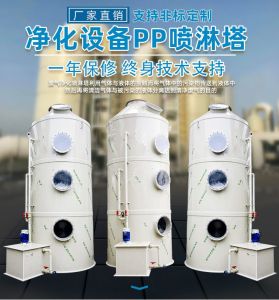
PP Fire Retardant Spray Tower
Price on request

PP Flame-Retardant Welding Rod
Price on request
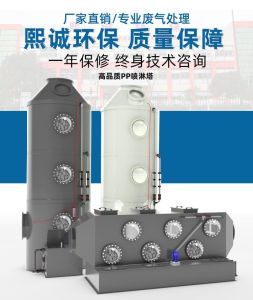
Flame Retardant Horizontal Spray Tower
Price on request