
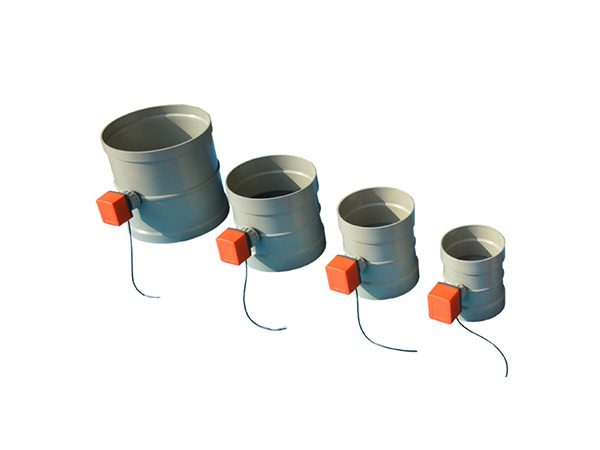
Corrosion-resistant actuator
| Product Model | Corrosion-Resistant Electric Actuator Series for Air Valves |
|---|---|
| Category | Laboratory Products |
| Reference Price | Price on request |
Product Overview
The corrosion-resistant actuator is a specially designed electric actuation device for driving corrosion-resistant air valves in acidic, alkaline, salt spray, and other corrosive gas environments. Standard actuators with external casings, motors, and terminal blocks exposed to corrosive gases for extended periods will rust and fail. Corrosion-resistant actuators incorporate corrosion-resistant design in housing materials, surface treatment, wire connection sealing, and connecting parts. They are directly installed on PP or PPs corrosion-resistant air valves to drive the valve diaphragm to complete opening, closing, or regulating actions, serving as the auxiliary power components for automated air valve systems in chemical, electroplating, laboratory, and semiconductor corrosion exhaust systems.
Corrosion-resistant actuators are categorized into two control types: on/off (switching) and analog. Switching actuators receive power signals to drive the valve fully open or fully closed, used for equipment interlocking and remote start/stop. Analog fast actuators receive standard control signals and can drive the valve to stop at any angle, suitable for variable airflow and continuous regulation. Product torque ranges from small to large, with small torque matched to small-diameter air valves and large torque to large-diameter and multi-leaf valves. The same corrosion-resistant platform covers multiple valve diameter specifications commonly used in laboratories, including custom non-standard sizes.
The corrosion-resistant actuators supplied by Xicheng Environmental Protection are compatible with PP round valves, square multi-leaf valves, and enclosed valves. Typical switching specifications feature a power supply of 220V and approximately 7W power, with torque ranging from several newton-meters to tens of newton-meters, with travel time increasing with higher torque. Analog fast actuators use an AC/DC 24V power supply with multiple torque options. Specific torque selection depends on valve diameter, diaphragm area, and airflow pressure. Actuators can be supplied as complete sets with valves to ensure matching connection dimensions and torque.
Working Principle
The power principle of the corrosion-resistant actuator is the same as that of a standard air valve actuator: when the motor is powered, it outputs low-speed high-torque through a reduction gear set, driving the output shaft clamp to rotate the valve shaft 0 to 90 degrees. Switching actuators operate to fully open or fully closed positions, stopping power supply via internal limit switches to maintain the position, with reverse action switching the power circuit. Analog actuators internally compare input signals with the actual output shaft position, driving the motor to rotate forward or backward to precisely stop the diaphragm at the target angle.
Corrosion resistance is the core feature of this product, achieved through multiple protections: the housing uses corrosion-resistant engineering plastic or metal casings treated with corrosion-resistant coatings to resist acidic, alkaline, and salt spray erosion. The junction box and outlet adopt sealed structures to prevent corrosive gases and moisture from entering the motor and circuit board. The output shaft, fasteners, and mounting brackets use stainless steel or corrosion-resistant materials, preventing galvanic corrosion when connected to PP valves. Seals between the output shaft and valve shaft prevent corrosive gases from leaking along the shaft into the actuator. Through these protections, the actuator can operate reliably in corrosive exhaust environments for long periods, with motors free from jamming, terminals free from corrosion, and controls free from failure.
Structural Composition
The corrosion-resistant actuator consists of a corrosion-resistant housing, motor, reduction gear set, output shaft clamp, limit switches and feedback, control circuit, sealed junction box, and mounting bracket. The housing is a corrosion-resistant sealed casing with a protection level suitable for corrosive and humid environments. The motor and reduction mechanism are enclosed within the housing, with the output shaft extending from the lower part of the casing, connected to the valve shaft via the clamp.
Switching models include built-in full-open/full-close limit switches and position feedback contacts. Analog models feature position sensors, servo circuit boards, and signal terminals, commonly powered by AC/DC 24V, with control and feedback as standard analog signals. The housing includes a manual operation knob for manual driving during offline debugging. The mounting bracket and fasteners use corrosion-resistant materials such as stainless steel, with the actuator securely fixed to the valve body. Different torque specifications have varying external dimensions and clamp ranges, matched to valve shaft diameters.
Specification Model Table
The table below shows typical specification grades of corrosion-resistant actuators, with specific torque and valve diameters matched during selection.
| Type | Typical Power Supply | Torque Grades | Compatible Valve |
|---|---|---|---|
| Switching | 220V | Small Torque Fast | Small-Diameter Round Valve |
| Switching | 220V | Medium-Large Torque | Large-Diameter Multi-Leaf Valve |
| Analog | AC/DC 24V | Multiple Torque Ranges | Variable Airflow Adjustment Valve |
Product Features
Corrosion-resistant actuators feature corrosion-resistant sealing, series torque, and comprehensive control types, serving as specialized drive devices for corrosion-resistant air valves in corrosive environments. Key features include:
- Corrosion-resistant housing and sealed junction box, resistant to acid, alkali, and salt spray erosion
- Shaft fasteners made of stainless steel or corrosion-resistant treatment, free from rust and jamming
- Two control types: switching and analog, suitable for both opening/closing and regulation
- Torque ranges from several newton-meters to tens of newton-meters, matched to various sizes
- Covers small to large diameters and non-standard PP valves
- Output clamp directly connects to the valve shaft, easy installation and replacement
- Includes manual operation and position feedback, convenient for debugging and maintenance
| Type | Digital Input / Analog Input |
|---|---|
| Switching Power Supply | 220V |
| input type="text" value="Switching Power" / | Approximately 7W |
| Analog Power Supply | AC/DC 24V |
| Torque Specifications | From several Newton-meters to tens of Newton-meters classification |
| Output Stroke | 0° to 90° |
| Anti-corrosion method | `Anti-corrosion housing with sealing` |
| Axial system materials | Stainless Steel / Corrosion-Resistant Materials |
| Manual operation | Manual Button |
| Companion Products | PP Corrosion-Resistant Air Valve |
Application Industries
- Electroplating Workshop Acid-Alkali Exhaust Dry Pipe Electric Actuator
- Chemical Corrosive Gas Exhaust System Corrosion-Resistant Actuator
- Semiconductor and Panel Factory Acid-Alkali Exhaust Valve Actuator
- Lab Fume Hood Corrosion-Resistant Valve and VAV Valve Actuator
- Metallurgical Acid Pickling Line Corrosive Exhaust Electric Actuator
- Wastewater Treatment Plant Odor and Corrosive Gas Valve Actuator
- Corrosion-Resistant Air Damper Automatic Control in Salt Spray Humid Environments
Typical Process Locations
The corrosion-resistant actuator is directly installed on the valve shaft extension of PP, PPs corrosion-resistant valves, depending on the valve's location in corrosive exhaust pipelines, equipment interfaces, and fan inlets/outlets. Digital input models connect to equipment interlock and remote on/off control, while analog input models connect to VAV controllers or PLC analog outputs. Although the actuator is designed for corrosion resistance, it should be installed as far as possible from dripping points directly below the pipeline. Ensure perfect sealing at the valve shaft, downward-facing cable outlet from the junction box with proper cable sealing, and add a corrosion-resistant cover over the actuator in highly corrosive workshops.
During selection, calculate the required torque based on the valve diameter, number of vanes, and maximum air pressure, then choose the corresponding specification with a safety margin. Larger torque is required for large-diameter multi-leaf valves and soft-seal enclosed valves. During installation, ensure the clamp is coaxially tightened with the valve shaft, and the actuator bracket is reliably load-bearing. First, manually rotate the valve to confirm its flexibility, then power it on to verify the switching direction, limits, and feedback. For analog models, calibrate the correspondence between the valve position (fully closed to fully open) and the signal. Regularly inspect the casing seal, shaft system, and corrosion on terminal connections during operation.
Related Products
View More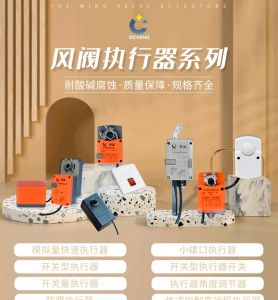
 Hot
Hot
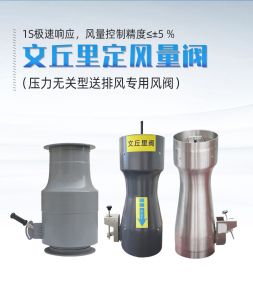
Venturi Valve
 Hot
Hot
Ventilation Hood
 Hot
Hot
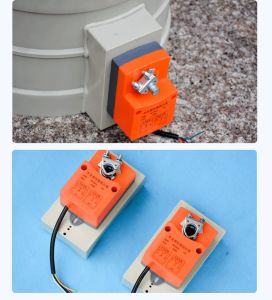
Switching Type Corrosion-Resistant Actuator
Get Quote
Switching Type Corrosion-Resistant Actuator / Corrosion-Resistant Electric Actuator Series for Air Valves