
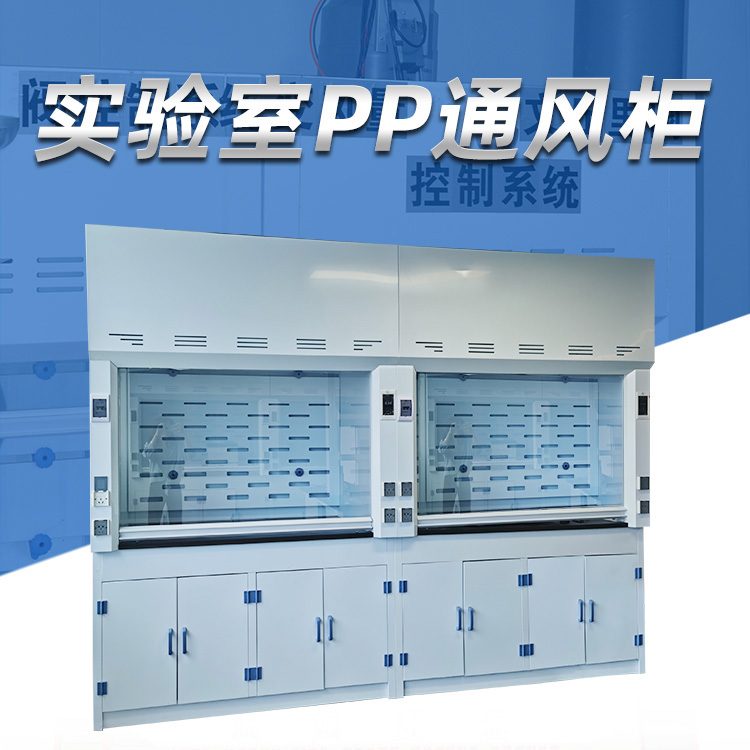
Ventilation Hood
| Product Model | PP Corrosion-Resistant Fume Hood Series |
|---|---|
| Category | Laboratory Products |
| Reference Price | Price on request |
Product Overview
Fume Hood, also known as fume hood or exhaust cabinet, is the most commonly used and critical local exhaust safety equipment in chemical laboratories. Experimental personnel perform chemical operations that generate harmful gases, vapors, dust, or odors inside the ventilation cabinet's working chamber. The ventilation system continuously extracts air from the cabinet, creating a stable face velocity at the sliding window opening that flows into the cabinet. This confines pollutants within the cabinet and treats them through exhaust pipes before discharge, effectively isolating experimental personnel from toxic and harmful gases.
The ventilation cabinet is not simply an exhaust fan with a cabinet. Its core performance lies in the stability of the face velocity at the window opening and the airflow organization within the cabinet. If the face velocity is too low, harmful gases may escape from the window and endanger personnel. If the face velocity is too high, it leads to energy waste and may interfere with experiments or cause turbulent airflow within the cabinet. A well-designed ventilation cabinet maintains stable face velocity at different window openings through baffle plates, make-up air structures, and airflow control valves. The cabinet body material is selected based on the experimental medium, commonly including PP, all-steel, and stainless steel. Among these, PP ventilation cabinets are resistant to acid and alkali corrosion, making them suitable for chemical, electroplating, and semiconductor laboratories.
The PP ventilation cabinets supplied by Xicheng Environmental Protection are made of PP board, offering corrosion resistance and easy cleaning. They are equipped with adjustable tempered glass windows, work surfaces, baffle plates, waterproof power supply, lighting, and water supply/drainage interfaces. The exhaust outlet can be paired with fixed or variable airflow Venturi valves. Multiple ventilation cabinets can be supported to form a centralized exhaust system, with dimensions and configurations customizable to laboratory requirements.
Working Principle
The ventilation cabinet operates based on the safety curtain created by exhaust airflow. The exhaust fan draws air from the cabinet through pipes, creating a relative negative pressure inside the cabinet compared to the laboratory. Air enters the cabinet from the window opening at a relatively uniform speed, forming an air barrier. Harmful gases generated during experiments are carried into the exhaust channel by the airflow and cannot diffuse toward the operator. The airflow speed at the window opening is called the face velocity, which is the core indicator for measuring the safety performance of the ventilation cabinet.
The cabinet is equipped with baffle plates and upper and lower exhaust channels to organize airflow rationally within the working chamber, preventing dead zones and eddies from forming. The fixed airflow system maintains a constant exhaust volume through Venturi fixed airflow valves. The variable airflow system measures the window displacement or face velocity in real time using sensors, controlling variable airflow valves to adjust the exhaust volume, ensuring stable face velocity even when the window opening changes, and reducing exhaust volume when the window is closed for energy savings. The PP cabinet body and baffle components are resistant to acid and alkali corrosion, remaining rust-free and free from pollutant adsorption even with long-term exposure to corrosive gases.
Structural Components
The ventilation cabinet consists of a cabinet body, working chamber, window, work surface, baffle system, exhaust interface, control and lighting, and water/electricity accessories. The cabinet body and working chamber lining are welded PP boards, offering corrosion resistance and a smooth, easily cleanable surface. The upper part is the exhaust box and exhaust pipe connection, the lower part is the working chamber, and the bottom is the work surface and cabinet base.
The window is made of tempered glass that can slide up and down, equipped with counterweights or mechanical balancing devices to stay at any position with upper and lower limiters. Baffle plates are installed on the rear wall and top of the working chamber to form rational airflow channels. The work surface is made of corrosion-resistant solid chemical-resistant board, PP board, or ceramic board, equipped with cup holes and drip structures. The exhaust outlet is located at the top of the cabinet, connected to exhaust pipes and airflow control valves. The front panel or side column is equipped with lighting switches, waterproof power sockets, airflow indicators, and audible/visual alarms. LED corrosion-resistant lighting is provided inside the cabinet, and water supply/drainage and gas valves are configured based on experimental needs.
Specification Model Table
The table below shows the main configuration forms of ventilation cabinets. Specific dimensions and control methods are designed according to laboratory requirements.
| Item | Configuration | Description |
|---|---|---|
| Cabinet Material | PP / All-Steel / Stainless Steel | Selected by medium |
| Airflow Control | Fixed Airflow / Variable Airflow | Based on energy-saving requirements |
| Window | Sliding Tempered Glass | Any position locking |
| Work Surface | Chemical-Resistant Board / PP / Ceramic | Corrosion-resistant |
Product Features
PP ventilation cabinets are corrosion-resistant, feature rational airflow, and come with comprehensive configurations, making them the core protective equipment for chemical laboratories. The main features are as follows.
- PP cabinet body and lining are resistant to acid and alkali corrosion, suitable for chemical experiments
- Stable face velocity at window opening effectively isolates harmful gases
- Baffle plates rationally organize airflow, eliminating exhaust dead zones within the cabinet
- Adjustable tempered glass window locks at any position for excellent protection
- Optional fixed or variable airflow control for safety and energy efficiency
- Work surface with cup holes and integrated water/electricity/lighting for convenience
- Face velocity display and alarm for intuitive and controllable operation status
| Cabinet material | PP Polypropylene Sheet |
|---|---|
| window | Adjustable tempered glass |
| Exhaust Method | Upper mechanical exhaust |
| Control Method | Variable Air Volume (VAV) / Constant Air Volume (CAV) Optional |
| Face Airflow Speed Control | Constant face wind speed |
| Internal material flow | Back Wall Diffuser |
| Material of the work surface | Corrosion-Resistant Chemical-Physical Board / PP |
| Lighting | Enclosure Anti-corrosion Lighting |
| Exhaust Port | Duct Top Air Volume Damper |
| `Corrosion resistance performance` | Acid and Alkali Corrosion Resistance |
Application Industries
- Acid and alkali volatile operation protection in chemical and petrochemical laboratory
- Sample pre-treatment fume hoods for testing and inspection institutions
- Fume hoods for R&D and quality inspection laboratories in pharmaceutical enterprises
- Fume hoods for wet chemical processes in semiconductor and electronics factories
- Corrosive operation exhaust ventilation in electroplating and surface treatment laboratories
- Chemical teaching experiment fume hoods in schools and research institutions
- Reagent operation protection in hospital pathology departments and disease control laboratories
Typical Process Locations
The fume hoods are installed along the laboratory wall or dedicated exhaust shafts. Multiple fume hood exhaust branches are connected to horizontal exhaust main pipes, which are centrally extracted by floor or roof exhaust fans. Harmful gases are discharged after being treated by devices such as spray nozzles or adsorption equipment through exhaust stacks. Each fume hood's exhaust branch is equipped with an airflow control valve (constant airflow or variable airflow Venturi valve), and the main pipe is fitted with a fan and muffler. The laboratory maintains a negative pressure relative to the corridor, with make-up air supplied through the room's fresh air system or unorganized openings via windows and doors.
During installation, the fume hoods are positioned and leveled. The exhaust interface on the hood top is connected to corrosion-resistant ducts, airflow control valves, and flexible connectors. When multiple hoods share a fan, the airflow control valves on each branch are balanced according to the required face velocity. For variable airflow systems, the window displacement or face velocity sensors, controllers, and electric valve wiring are properly connected. Before operation, each hood is tested for uniformity and stability of face velocity, with alarm functions verified. Operators are trained to maintain reasonable window openings and avoid blocking airflow by stacking items inside the hood.
Constant airflow fume hoods maintain a constant exhaust volume with a simple structure and low investment. However, when the viewing window is partially closed, the wind speed increases and energy consumption does not decrease, making them suitable for laboratories with a small number of fume hoods and low usage frequency. Variable airflow fume hoods adjust the exhaust volume by the displacement of the viewing window or through the linkage with venturi variable airflow valves, increasing the exhaust volume when the window is opened and decreasing it when closed, while maintaining a constant face velocity. This ensures safety and significantly reduces the energy consumption of air conditioning fresh air, making them suitable for modern laboratories with a large number of fume hoods, long operating hours, and energy-saving requirements. However, they require a higher initial investment and more stringent control and maintenance requirements.
Related Products
View More
 Hot
Hot
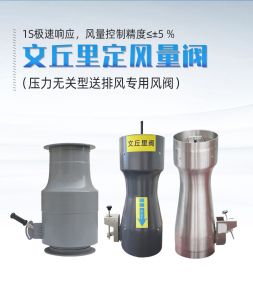
Venturi Valve
 Hot
Hot
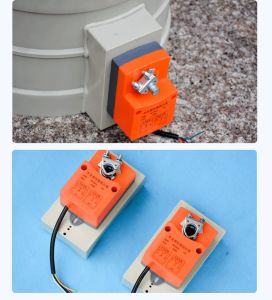
Switching Type Corrosion-Resistant Actuator
 Hot
Hot
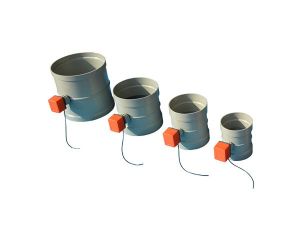
Corrosion-resistant actuator
Get Quote
Corrosion-resistant actuator / PP Corrosion-Resistant Fume Hood Series