

PP Porous Plate
| Product Model | Punching Filter Plate Series |
|---|---|
| Category | PP Molded Products |
| Reference Price | Price on request |
Product Overview
PP Perforated Plate, also known as punched plate, filter plate, or mesh plate, is a plastic plate component with regularly arranged through-holes machined on PP or PPs sheet material. The perforated plate retains the flatness and certain strength of the plastic sheet while providing ventilation, liquid passage, and screening capabilities. It is used in exhaust gas treatment equipment as gas-liquid distribution plates, filler support plates, filter media support plates, and tank internal dividers.
Compared to injection-molded grating plates, perforated plates are manufactured by punching holes through a solid sheet, allowing for flexible adjustment of hole size and pitch. The plate size is limited by the dimensions of the raw material sheet but can be expanded through welding. Common hole types include round holes, with rectangular and square holes also available. The plate surface is flat, edges are smooth, and hole openings are free of burrs. The PP material is resistant to acid, alkali, and salt corrosion, lightweight, weldable, and cuttable, making on-site processing convenient.
The PP perforated plates supplied by Xicheng Environmental Protection can be customized for thickness, hole size, and open area ratio, and are also available in flame-retardant PPs material. In addition to tower internals, perforated plates are widely used in corrosion-resistant sump covers, equipment guards, material screening plates, and tank overflow plates, making them a versatile plastic processing component.
Working Principle
Perforated plates achieve uniform fluid distribution through regularly arranged through-holes. When used as a distribution plate, airflow or liquid flow passes through dense small holes and is divided into many fine streams, evenly distributed across the cross-section, eliminating large-scale deviations. When used as a filter screen, the hole size is smaller than the particle size of the material to be intercepted, trapping solid particles on the plate surface while allowing liquids or gases to pass through, achieving solid-liquid or solid-gas separation.
As a support component, the solid plate surface of the perforated plate bears the weight of the upper filler and filter media, while the through-holes ensure smooth fluid passage. Plate thickness and hole bridge width determine load-bearing capacity, while open area ratio determines flow capacity, requiring a balance between the two. The corrosion resistance of the PP material ensures that the hole size and plate body do not corrode or expand when the plate is immersed in acidic or alkaline liquids or exposed to corrosive gases, maintaining stable separation and distribution performance.
Structural Composition
Perforated plates are made from PP solid sheet material, with regularly arranged through-holes formed through punching. Equal-width hole bridges are retained between holes, and a certain width of unperforated solid edge area is reserved along the four edges of the plate for welding, fixing, or splicing. Round hole plates distribute stress evenly and are easy to process, making them the most common type. Rectangular hole plates have a high open area ratio and are less prone to blockage, making them suitable for media containing fibers or crystals.
Larger-sized perforated plates are assembled from multiple punched plates along the solid edge area, with weld seams avoided in major hole regions. Perforated plates designed to support filter media can have reinforcing bars welded below or be supported on steel beams coated with PP to prevent excessive deflection due to large span lengths. The plate components can be rolled into cylinders, thermally bent into troughs, or welded with flanges and frames to form assemblies.
Specification and Model Table
The table below shows the hole types and typical applications of perforated plates, with hole size and plate thickness customizable as needed.
| Hole Type | Features | Typical Applications |
|---|---|---|
| Round Hole | Even stress distribution | Distribution, support, and filtration |
| Rectangular Hole | High open area ratio | Media screening for easy blockage |
| Square Hole | Compact arrangement | Special screening applications |
Product Features
PP Perforated Plates are adjustable in hole size and flexible in processing, making them a universal plate component for tower internals and corrosion-resistant screening. The open area on the plate surface can be customized based on airflow distribution and screening particle size, with cutting and welding being convenient. They can adapt to different-shaped towers and tanks, with the main features as follows.
- Regularly arranged and evenly spaced holes ensure effective gas-liquid distribution and screening
- Hole size, pitch, and open area ratio are customizable for strong adaptability
- PP or flame-retardant PPs material, resistant to acid, alkali, and salt corrosion
- Flat and smooth plate surface, burr-free hole openings to prevent material buildup
- Cuttable, weldable, and thermally bendable for convenient on-site processing
- Lightweight, reducing labor intensity during installation and replacement
- Wide range of applications, suitable for tower internals, covers, and screening plates
| Base material | PP / PPs sheets |
|---|---|
| Processing Technology | Whole-plate punching |
| Die Configuration | Round Hole / Elliptical Hole / Square Hole |
| Corrosion resistance performance | Acid-alkali-resistant salt |
| Flame Retardant Options | PPs self-extinguishing |
| Machinability | Shearing, Welding, Hot Bending |
| Purpose | Dispersive Support Filtering Screening |
| Aperture | Select by Application |
| Thickness | Multiple plate thickness options available |
| Hole Rate | Designed according to operating conditions |
| Installation Location | Filler Support Distribution |
Application Industries
- Perforated plates for airflow uniform distribution in the inlet section of spray towers
- Perforated plates for supporting packing and filter media in packed and adsorption towers
- Limiting support plates above and below activated carbon and packing layers
- Corrosion-resistant solid-liquid separation and overflow baffle plates in tanks and containers
- Plastic screening plates for screening and dewatering of chemical materials
- Corrosion-resistant cover plates for electroplating workshops' floor drains and pools
- Debris interception and filtration plates for circulating water tanks
Typical Process Locations
Within packed and adsorption towers, perforated plates are installed at the bottom of the packing or filter media layer, resting on support rings to bear the media and allow gas-liquid passage. In the inlet section, perforated uniform flow plates can be set inside the tower to ensure uniform distribution of airflow entering the packing layer, avoiding deviation and local erosion. In water tanks and tanks, perforated plates are used to separate sedimentation zones, intercept debris, or support filter media.
In solid-liquid separation applications, perforated plates are installed at an incline or horizontally inside the tank body. When liquid containing solids flows over the plate surface, solids are retained, while liquid passes through the holes into the lower chamber. As cover plates, they are directly laid on supports at the edges of floor drains and pools. During installation, the gap between plate seams and the gap between the plate and the wall must be smaller than the size of the material being intercepted. When necessary, sealing strips or welded edges are added. Before machining, hole diameter, pitch, and open area ratio are determined based on the application. After punching, the flatness and burrs of the plate surface are checked. For large-sized plates, reinforcement or edge frame treatment is performed after cutting. During installation, the gap between plate seams and the plate wall must be smaller than the particle size being intercepted. Support frame spacing is set based on plate thickness and load. Regular shutdowns are scheduled during operation to clean blockages and crystallization on the plate surface. Plates with cracks or deformation are replaced promptly.
Related Products
View More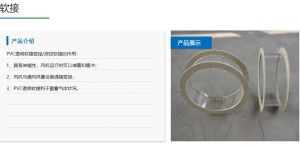 Hot
Hot
PVC Flexible Duct Connector
 Hot
Hot
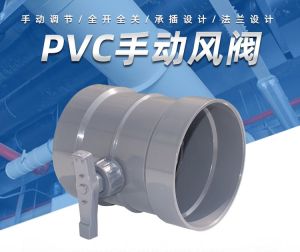
PVC Plastic Damper
 Hot
Hot
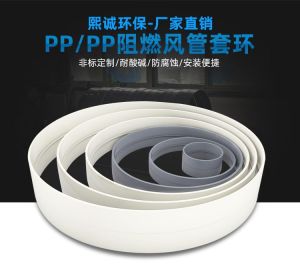
PP plastic ring
 Hot
Hot
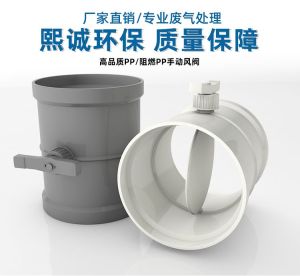
PP Manual Damper
Get Quote
PP Manual Damper / Punching Filter Plate Series