

PP Check Valve
| Product Model | PP soft seal check valve |
|---|---|
| Category | PP Machined Products |
| Reference Price | Price on request |
Product Overview
The PP check valve, also known as a one-way valve or non-return valve, is a plastic valve that allows airflow to pass in only one direction while automatically preventing reverse flow. It is installed on the outlet of corrosion-resistant fans or pipelines requiring prevention of gas backflow. It does not have an actuator or operating handle. Forward airflow lifts the valve disc, and upon fan shutdown, reverse airflow and the valve disc's self-weight cause it to automatically reseal, with the soft seal ring pressing against the valve seat to achieve low-leakage closure.
When the fan shuts down, if the pipeline is connected to an outdoor exhaust stack, parallel fans, or other areas, natural wind pressure, thermal pressure, and other operating fans may cause reverse airflow, leading to cold air infiltration from outdoors, corrosive gas intrusion into idle equipment or adjacent workshops, or harmful gas dispersion. The check valve automatically closes in an instant without power, control signals, or manual operation, making it the most economical and reliable device for preventing backflow. The soft-seal structure results in significantly lower leakage compared to conventional flap valves.
The PP check valves supplied by Xicheng Environmental Protection are available in molded or plate-welded body designs, with single- or multi-lobed hinged valve discs, equipped with soft seal rings and limit structures. The valve shaft is horizontally installed to allow the valve disc to close under its own weight. Available in circular, square, and various sizes, they can be selected with flame-retardant requirements for flame-retardant PP check valves.
Working Principle
The check valve operates automatically based on airflow pressure differential and the valve disc's self-weight, making it a self-actuated valve. When the fan is running, forward airflow creates a pressure differential on both sides of the valve disc. When the thrust generated by this differential exceeds the valve disc's self-weight and the friction of the shaft, the valve disc pivots around the shaft, opening the valve for airflow. The greater the airflow, the larger the valve disc opening, which is limited by a stop structure. After the fan shuts down, the forward pressure differential disappears, and the valve disc falls under its self-weight. If reverse airflow exists, the reverse pressure further presses the valve disc against the valve seat, quickly closing the valve.
The sealing function is achieved by the soft seal ring on the edge of the valve disc. When the valve disc reseats, the seal ring presses against the valve seat, and the tighter the reverse airflow pressure, the more reliable the seal—this is the unique self-sealing characteristic of check valves. The PP valve body and valve disc are resistant to acid and alkali corrosion, do not rust or jam, and the shaft is made of corrosion-resistant material with a lightweight bearing, ensuring long-term flexible operation and proper reseating. The valve disc is designed as a lightweight structure, requiring only a small forward airflow to open and reducing resistance during normal operation.
Structural Components
The check valve consists of a valve body, valve disc, shaft, seat seal ring, limit device, and end connections. The valve body is a molded cylindrical or plate-welded cylindrical shell with a valve disc pivot space inside. The valve disc is a circular plate or a multi-lobed assembly with a corrosion-resistant soft seal ring embedded at the edge. The upper part is hinged to the valve body via the shaft, allowing it to pivot in one direction, and the shaft must be horizontally installed to ensure self-weight closure.
A flat valve seat is set in the fully closed position of the valve body, and a limit block or limit rod is installed on the opening side of the valve disc to restrict maximum opening and prevent excessive rotation. The shaft is made of stainless steel-coated or corrosion-resistant material, with a lightweight shaft sleeve for smooth rotation. Large-diameter check valves use a multi-lobed structure to reduce the size of a single lobe and the opening pressure differential. The valve body is connected at both ends via spigot or flange, with slight differences between vertical and horizontal installation structures. Orders and installation must follow the valve body orientation markings.
Specification Model Table
The following table compares the functional differences between check valves and other types of fan valves, with selection determined by function.
| Valve Type | Operation Mode | Function |
|---|---|---|
| Check Valve | Self-actuated | Prevent reverse flow |
| Regulating Valve | Manual / Electric | Control airflow volume |
| Isolation Valve | Manual / Electric Pressure | Actively isolate pipeline |
Product Features
The PP check valve automatically prevents backflow, features soft sealing with low leakage, and requires no power, making it an economical device for fan shutdown protection. Key features include:
- Automatic opening in the forward direction and closing in reverse, requiring no operation
- Independent of power and control signals, providing automatic protection upon shutdown
- Soft seal ring with reverse self-tightening for minimal leakage
- PP material resistant to acid and alkali corrosion, with non-rusting and non-jamming valve discs
- Lightweight valve disc requires low opening pressure differential, reducing operational resistance
- Effectively prevents air infiltration, cross-contamination, and harmful gas dispersion
- Available in single- and multi-lobed structures, with customizable sizes
| Body Material | PP Polypropylene |
|---|---|
| Sealing Form | Soft Seal Ring Self-Tightening |
| Action Method | Self-Acting Angle Valve |
| Drive Energy | No power required |
| Valve Disc Type | Single-petal / Multi-petal |
| Installation Requirements | Shaft Axis Horizontal |
| Corrosion resistance performance | Acid and Alkali Salt Resistance |
| Connection Method | `Spigot / Flange` |
| Function | Prevent air flow backflow |
| Flame Retardant Options | PPs self-extinguishing |
| Resistance Characteristics | Low resistance in fully open state |
Application Industries
- Preventing gas backflow into the system from the fan outlet during anti-corrosion operations
- Preventing cross-flow between multiple parallel fans
- Preventing outdoor air from infiltrating into the exhaust stack at the bottom
- Automatic isolation of bypass circuits for single-use and backup purification equipment
- Preventing cross-contamination in laboratory ventilation shafts
- Preventing gas leakage between workshop exhaust and adjacent areas
- Preventing cold air from infiltrating pipelines after fan shutdown during winter
Typical Process Locations
The most typical installation location for check valves is the fan outlet pipe section. When the fan is running, the valve disc is blown open, and it automatically closes after shutdown to prevent backflow from the exhaust stack and natural wind. When multiple fans are connected to a single main pipe, a check valve is installed at each fan outlet to prevent the airflow from operating fans from backflowing into standby fans. Backup equipment bypass circuits are also automatically isolated by check valves. The installation location should be near the fan outlet, and sufficient space must be left around the valve for the disc to swing.
During installation, it must be ensured that the valve shaft is horizontal, the disc's weight is oriented toward the closing direction, and the valve body's airflow direction indicator aligns with the actual airflow. Incorrect installation may result in the disc being unable to open or close properly. Pipe supports must be installed before and after the valve, and no debris or other components should be within the disc's operational range. When starting the fan, observe whether the disc opens normally and whether there are any abnormal noises. When shutting down, observe whether the disc returns to its seated position quickly. Check valves cannot replace isolation valves requiring active shutdown; when manual or electric isolation is required, a sealed valve must still be used.
Related Products
View More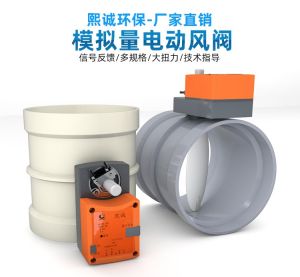 Hot
Hot
PP Fire-Resistant Analog Air Valve
 Hot
Hot
PP Fire-Resistant Closed-Check Valve
 Hot
Hot
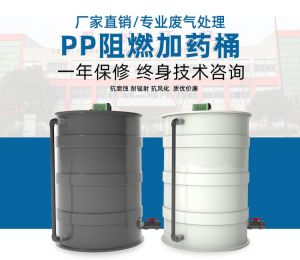
PP Flame Retardant Additive Drum
 Hot
Hot
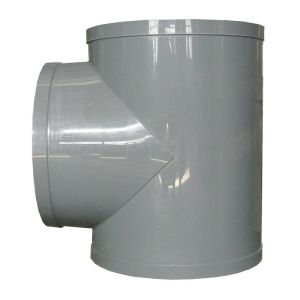
PP Flame Retardant Processed T-Connector
Get Quote
PP Flame Retardant Processed T-Connector / PP soft seal check valve