

PP Flame Retardant Processed Square Tube
| Product Model | PPs Plate-Welded Rectangular Duct Series |
|---|---|
| Category | PP Machined Products |
| Reference Price | Price on request |
Product Overview
PP Flame-Retardant Process Rectangular Duct, also known as rectangular air duct, is a square or rectangular cross-section ventilation duct made by folding, splicing, and flange reinforcement of PP flame-retardant plates. The rectangular duct can be laid closely to building beam bottoms, walls, and ceilings, effectively utilizing space. In workshops and laboratories with limited ceiling height and dense pipelines, it is more convenient to arrange than round ducts, making it a common type of pipe in corrosion-resistant exhaust systems.
The rectangular duct is formed by folding or splicing four PP plates into a rectangle. The four corner seams are continuously welded along the length of the pipe. Reinforcing ribs are welded on the outer wall according to the cross-sectional size and negative pressure. Square flanges are welded at both ends. The PP material is acid and alkali-resistant, flame-retardant, and self-extinguishing with a lightweight design. The inner wall of the rectangular duct is smooth and flat, preventing rust, dust accumulation, and corrosion when conveying corrosive exhaust gases. The rectangular cross-section also facilitates direct connection with square dampers and square equipment interfaces.
Xicheng Environmental can design the cross-sectional dimensions of the rectangular duct based on on-site space and airflow. The length and width specifications are flexible and are not limited by standard round duct diameters. It is also accompanied by processed components such as square elbows, square tees, square transitions to round, and square dampers. The rectangular duct is particularly suitable for compact corrosion-resistant ventilation applications in electroplating workshops, laboratory fume hoods, equipment attics, and ceiling spaces.
Working Principle
Like round ducts, the rectangular duct is used for exhaust gas transportation. Under the pressure difference generated by the fan, the gas flows along the rectangular cross-section. Rectangular ducts can be designed with a flat and wide shape under the same cross-sectional area, allowing them to be arranged close to beam bottoms and ceilings, reducing the occupied ceiling height. When laid parallel to walls, the rectangular duct is installed close to the wall for stability and aesthetics. The rectangular duct forms a pipeline network through flange connections, transporting exhaust gas from collection points to purification equipment and exhaust stacks.
The corrosion and flame-retardant mechanism of the rectangular duct is the same as that of the round duct, relying on the chemical stability and flame-retardant components of the PP plates. It should be noted that the rectangular cross-section has weaker resistance to internal and external pressure differences compared to a circular cross-section. The flat side walls are prone to inward deformation under negative pressure, so the outer wall of the rectangular duct must be equipped with reinforcing ribs or frames to divide the large plates into smaller spans, increasing the stiffness of the wall panels. Properly reinforced rectangular ducts can maintain cross-sectional stability under design negative pressure without significant deformation or vibration.
Structural Composition
The rectangular duct is formed by four plates: an upper plate, a lower plate, and two side plates. The four corners are folded and welded or spliced by four plates. The longitudinal corner seams are continuously sealed along the full length. Vertical or horizontal reinforcing ribs are welded on the outer wall of the pipe at certain intervals. Large cross-sectional rectangular ducts use a combination of inner and outer reinforcement. Square PP flanges are welded at both ends, with holes drilled on the flange surfaces for connection using bolts and gaskets.
Rectangular duct components include square elbows, square tees, square reducers, square transitions to round, and square dampers, all processed and welded from PP plates. When connecting to round equipment or round ducts, a square-to-round transition is used. Pipe supports and hangers hold the bottom of the rectangular duct and fix the sides. Long pipe sections are equipped with expansion compensators. Flange-connected rectangular ducts can be disassembled in sections, while spigot-welded rectangular ducts are fixed connections.
Specification Model Table
The following table compares the layout characteristics of rectangular ducts and round ducts. The cross-sectional dimensions are designed based on airflow and space.
| Item | Rectangular Duct | Round Duct |
|---|---|---|
| Space Utilization | Top and wall mounting, space-saving | Larger ceiling height occupation |
| Pressure Resistance | Requires reinforcing ribs | Uniform stress distribution |
| Cross-Sectional Dimensions | Flexible length and width | By diameter series |
| Applicability | Attics, ceilings, laboratories | Outdoor main pipelines |
Product Features
PP Flame-Retardant Process Rectangular Duct offers flexible layout and space-saving benefits, making it a common choice for corrosion-resistant exhaust systems in compact workshops and laboratories. Key features include:
- Rectangular cross-section allows for ceiling and wall mounting, effectively saving space
- PP plates are acid and alkali-resistant and self-extinguishing, providing corrosion and fire protection
- Flexible length and width dimensions, customizable for on-site space
- Easy to connect with square dampers and equipment interfaces
- Outer reinforcing ribs ensure cross-sectional stability under negative pressure
- Smooth inner wall prevents corrosion, dust accumulation, and rust
- Complete system with matching components such as square elbows and square transitions to round
| Material | PPs Flame Retardant Panels |
|---|---|
| Processing Technology | Panel splicing |
| Section Shape | Square / Rectangular |
| Flame Retardancy | Self-extinguishing |
| Corrosion resistance performance | Acid and Alkali Salt Resistant |
| Strengthening Method | Outer wall reinforcement rib |
| Connection Method | Square Flange |
| Specifications and Features | Non-standard custom section size |
| Accessories Fittings | Square Bend Square Transition Square Air Valve |
| Sheet Thickness | Select according to section size |
| Inner Wall Features | Smooth, low friction |
Application Industries
- Rectangular ducts for laboratory fume hood exhaust in suspended ceiling
- Corrosion-resistant exhaust pipes for wall and beam installation in plating workshops
- Flat-wide main exhaust ducts for low-ceiling workshops
- Square exhaust ducts in equipment mezzanines of semiconductor factories
- Connecting pipe sections between fume hoods, exhaust hoods, and square dampers
- Corrosion-resistant rectangular ventilation pipes for underground and semi-underground spaces
- Parallel-installed square ducts in dense pipe galleries
Typical Process Locations
Square ducts are primarily used for indoor, suspended ceiling, equipment mezzanine, and wall-mounted exhaust pipelines. They connect to fume hoods, collection hoods, and square dampers at the front, horizontally arranged along beam bottoms or walls, and transition to outdoor circular main pipes or fans at appropriate locations via square-to-round adapters. In laboratory exhaust systems, horizontal pipe sections from fume hood outlets to vertical shafts extensively employ rectangular square ducts to accommodate limited suspended ceiling space.
During installation, square duct flanges must maintain parallel alignment and centered positioning, with complete sealing gaskets. Support brackets should stabilize the bottom of the duct and secure it on both sides to avoid unbalanced loading. Due to the large span of rectangular wall panels, bracket spacing should be reduced based on cross-sectional dimensions, with reinforcement direction and bracket positioning properly coordinated. Square ducts transition to round pipes or equipment interfaces using square-to-round or flexible connectors. When passing through walls or floors, sleeves should be pre-installed with proper sealing. Before installation, verify cross-sectional dimensions, plate thickness, and flange hole positions. Pipe sections are assembled and leveled on the ground before being hoisted and installed in segments, ensuring parallel flange alignment and continuous gasket sealing. For large-span rectangular wall panels, brackets are spaced according to cross-sectional dimensions, supporting the bottom surface, with reinforcement direction aligned with brackets. Sleeves are added when passing through walls or floors, sealed with non-flammable materials. During operation, inspect flanges and welds for air leaks and wall panel vibrations, promptly tightening and rewelding as needed.
Related Products
View More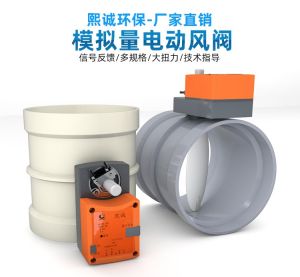 Hot
Hot
PP Fire-Resistant Analog Air Valve
 Hot
Hot
PP Fire-Resistant Closed-Check Valve
 Hot
Hot
PP Flame Retardant Additive Drum
 Hot
Hot
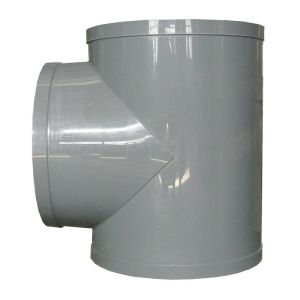
PP Flame Retardant Processed T-Connector
Get Quote
PP Flame Retardant Processed T-Connector / PPs Plate-Welded Rectangular Duct Series